
Progress Report
Cafe Imports was founded on the simple idea of finding remarkable coffees and telling stories about them. In the beginning, this was something akin to the wine industry; highlighting the region they came from and its specificity that made the coffee unique, talking about the variety, the process, and more importantly, the producers and the work they do to preserve the coffee’s quality and what makes it special.
This was a novel idea inspired by a visit to Brazil to visit my partner’s family farm and other farms in the region. Witnessing the disparity in coffee farmers’ lives as compared to ours at home inspired us to try to support and reward the hard work that coffee farmers were doing around the globe by telling their stories to coffee roasters and supporting them with price premiums, repeat business, and exposure to the people who roasted and served their life’s work of coffee. Connecting the source to the consumer. Like wine.
The coffee world and the World we live in have changed remarkably since then, and coffee farmers continue to innovate in a landscape of new fermentation processes, a troublesome commodities market, high interest rates, inflation and this last year, all of the challenges and curveballs associated with unpredictable tariffs. Even amidst this challenging landscape, Cafe Imports continues to be true to its mission and values of:
INCREASE the quality of life for those involved, from the tree to the cup, through the commerce of coffee.
DECREASE our negative impact on the earth through responsible and proactive business practices that emphasize environmental sustainability.
SHARE our passion for great coffee through education and example.
What is this report?
Coffee is an environmentally and socially impactful industry that we believe can do incredible good but can also cause harm if we aren’t cognizant and intentional in how we treat the planet and each other. This report is a check-in, a moment of reflection, and a point of reference for where we can focus that intention. We call it a Progress Report because we want to share with you both our successes and where we still have some work to do. In this report, you’ll see references to areas we are working on as we prepare for B Corp re-certification under the v2.1 standards and the European Union Deforestation Regulation (EUDR), as well as some things we’ve changed in 2025 as part of that never-ending quest to do better.
While we actively monitor and adapt as these regulations and requirements evolve, we see the value of such efforts in fostering innovation and putting shared language to our values of transparency and commitment to do right by the planet and people that we’ve held since day one. What this report isn’t, is an end. We hope it’s the start of a conversation, so if you are facing similar challenges and want to chat about anything you read here, reach out. Our door is always open!
Our People
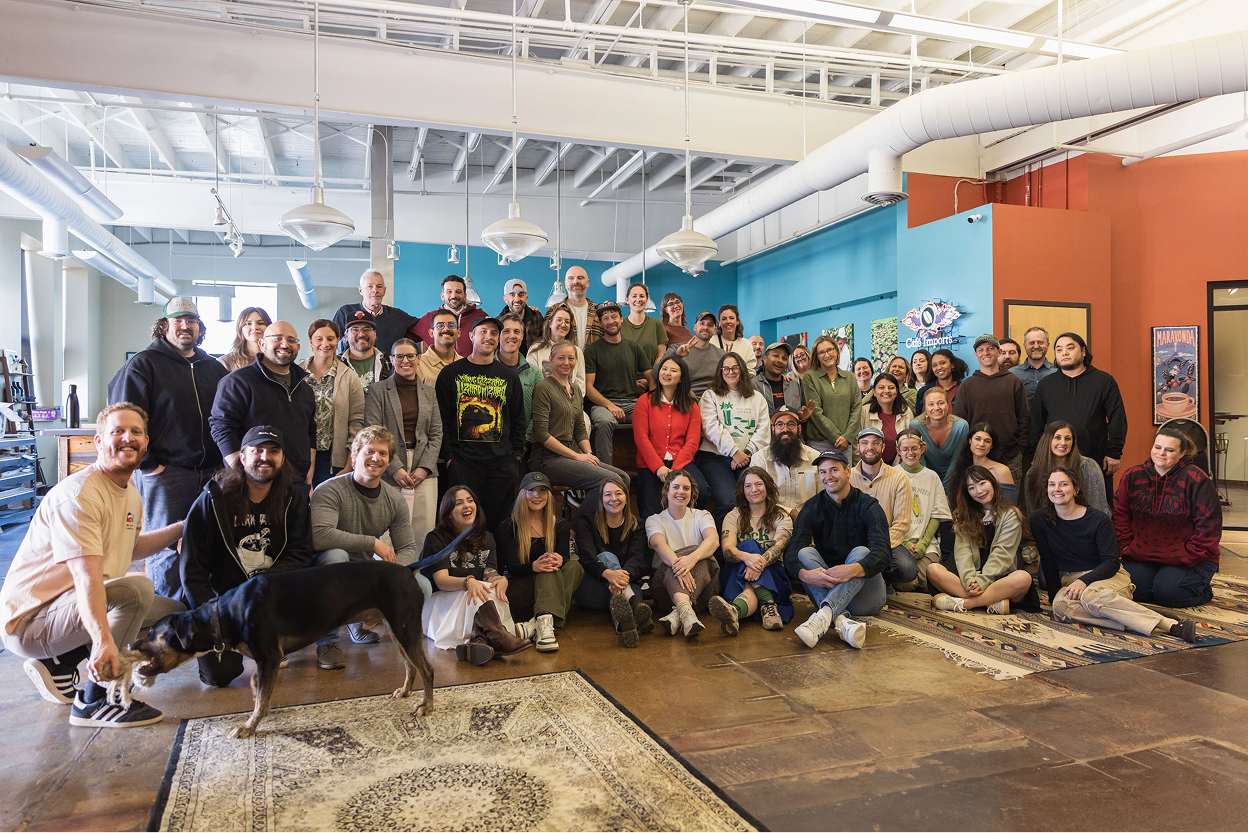
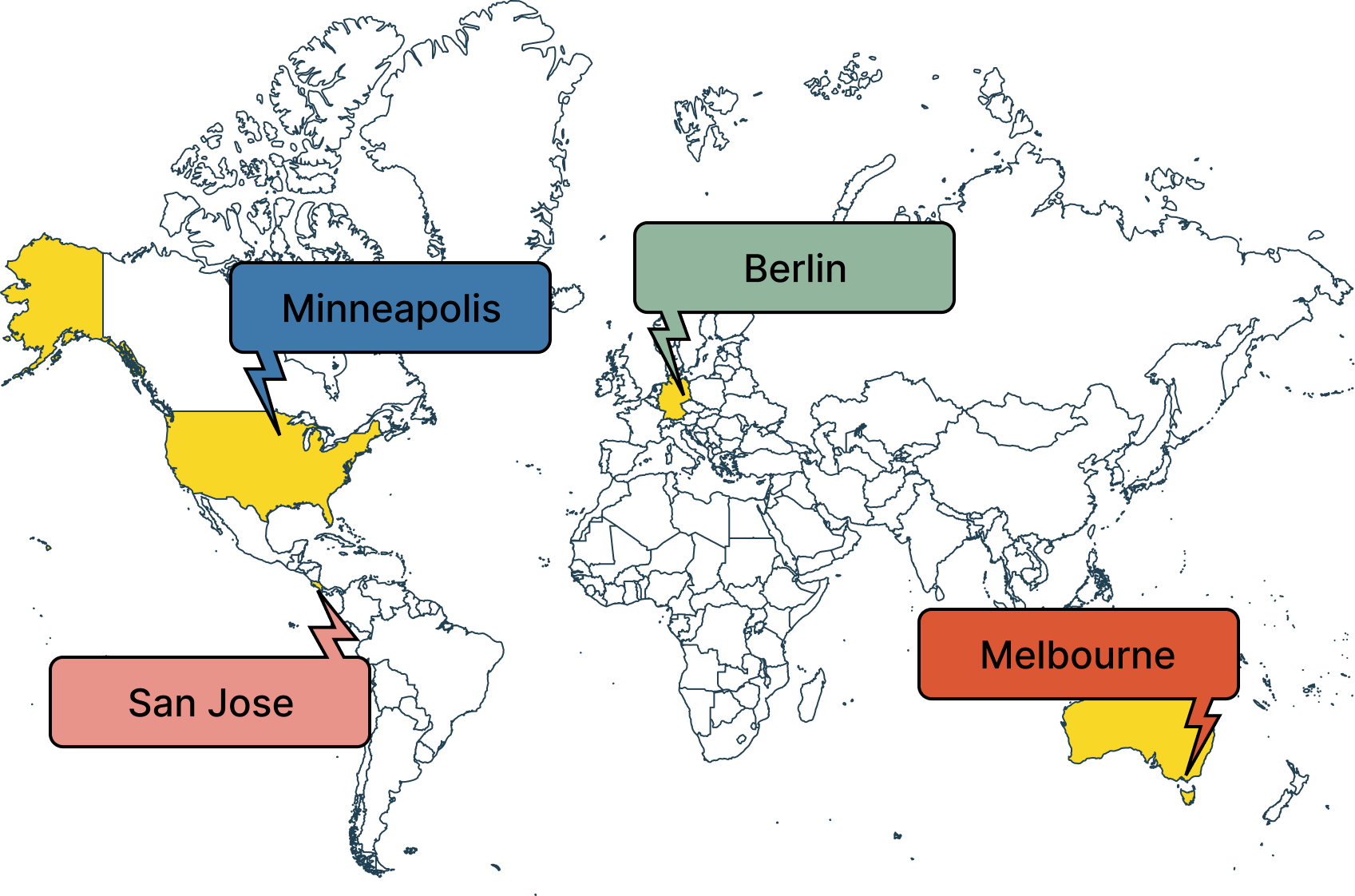
When you spot the Cafe Imports crew in the wild, they might be traipsing through a coffee farm, hearing about how the harvest is going, wrapping up orders to make sure they’re on the truck before the daily cutoff, tapping away at an email from the local cafe, or prepping samples and slurping in one of the offices. It’s a grand total of 68 humans, with the help of a few dogs and cats, that make it all tick, hailing from 17 different countries or regions and calling one of our 4 offices home base.
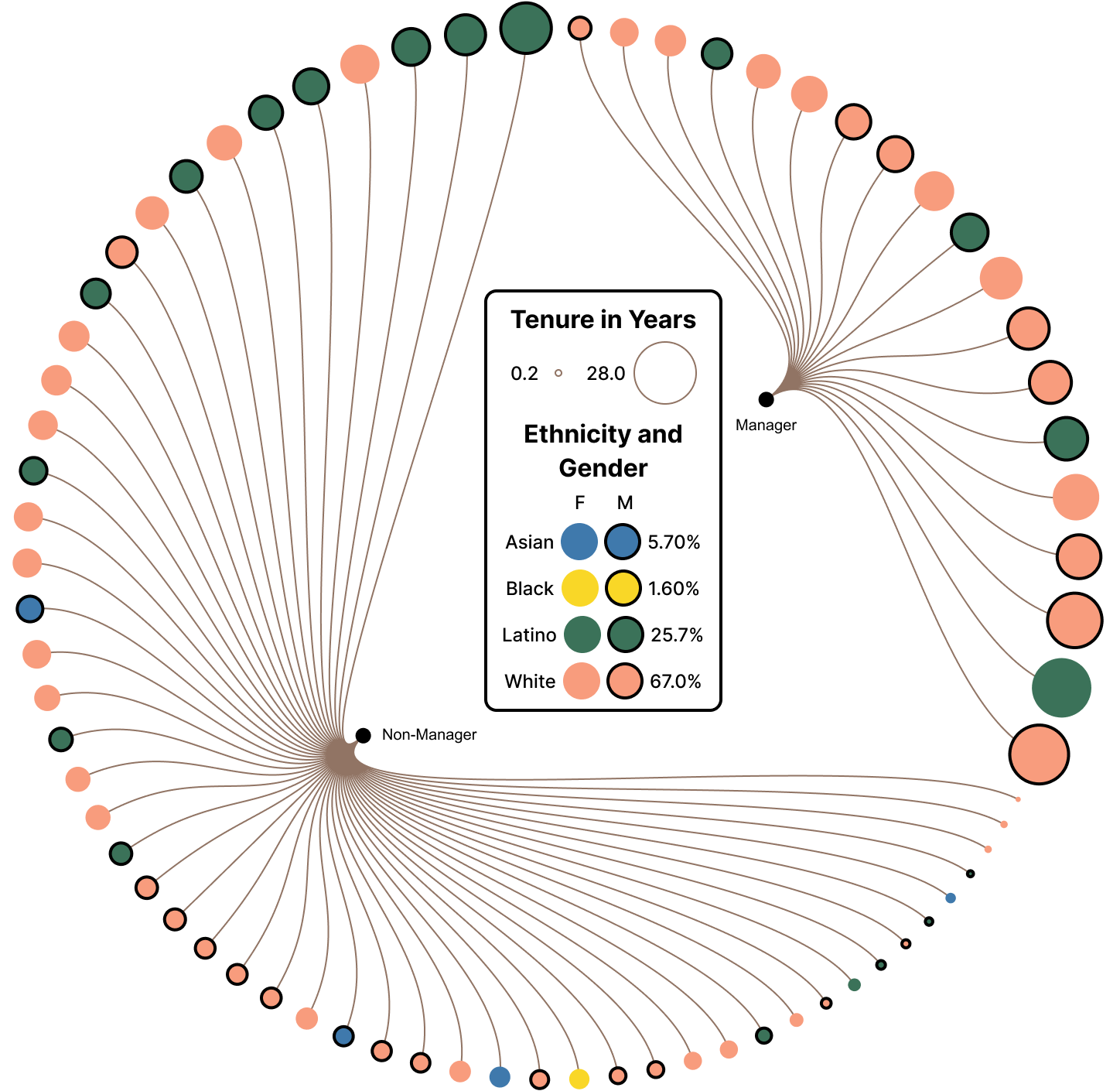
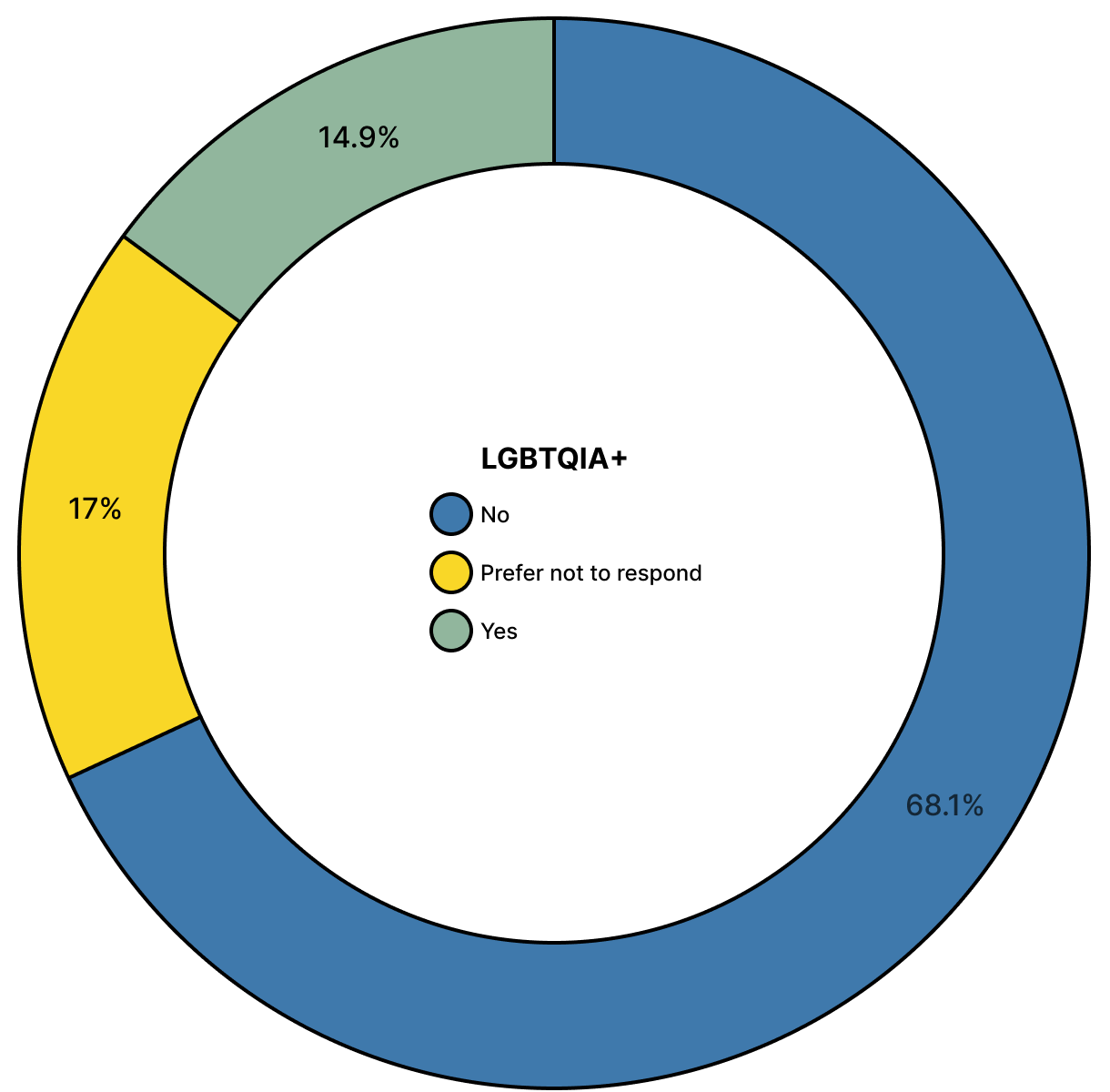
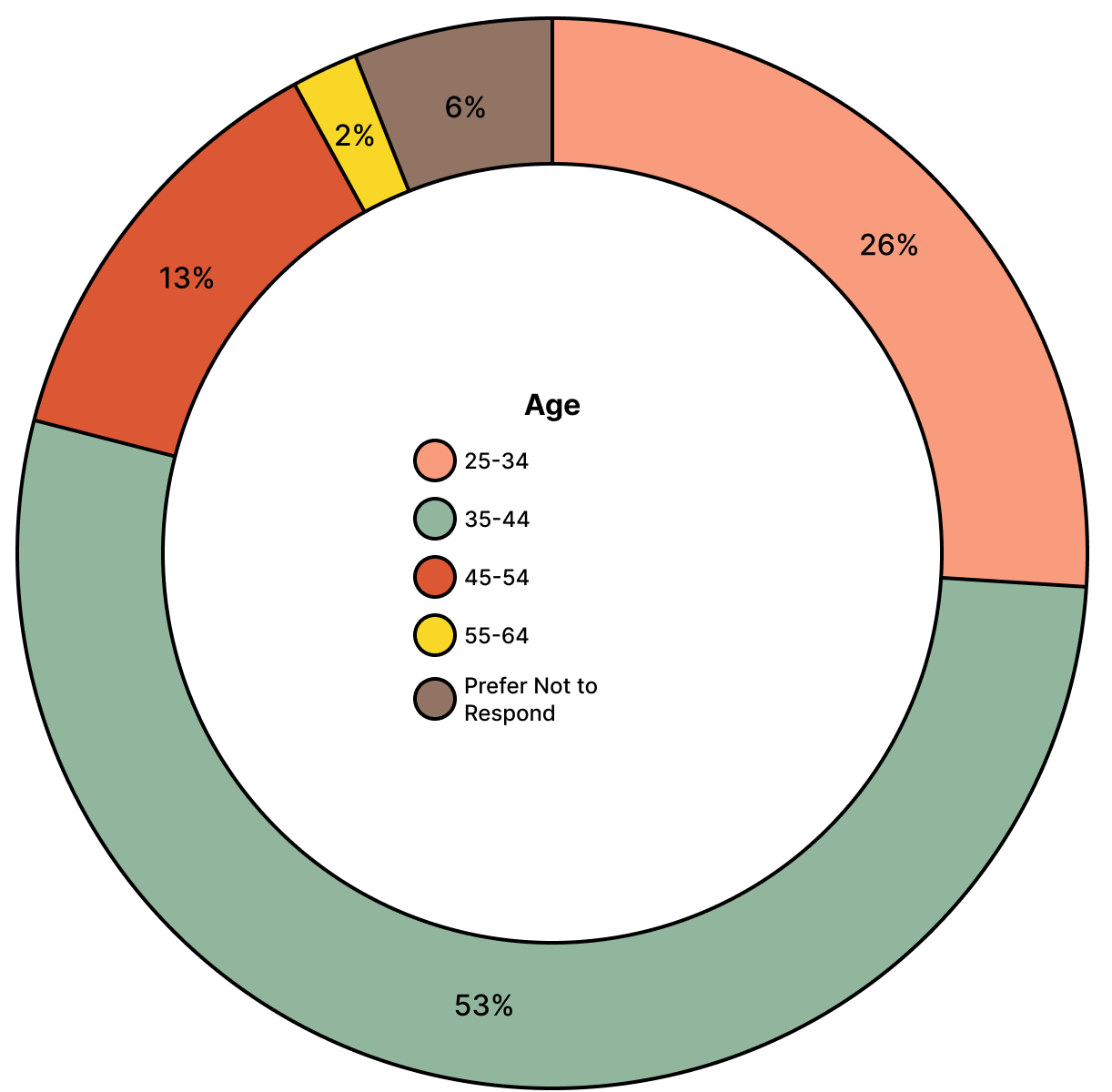
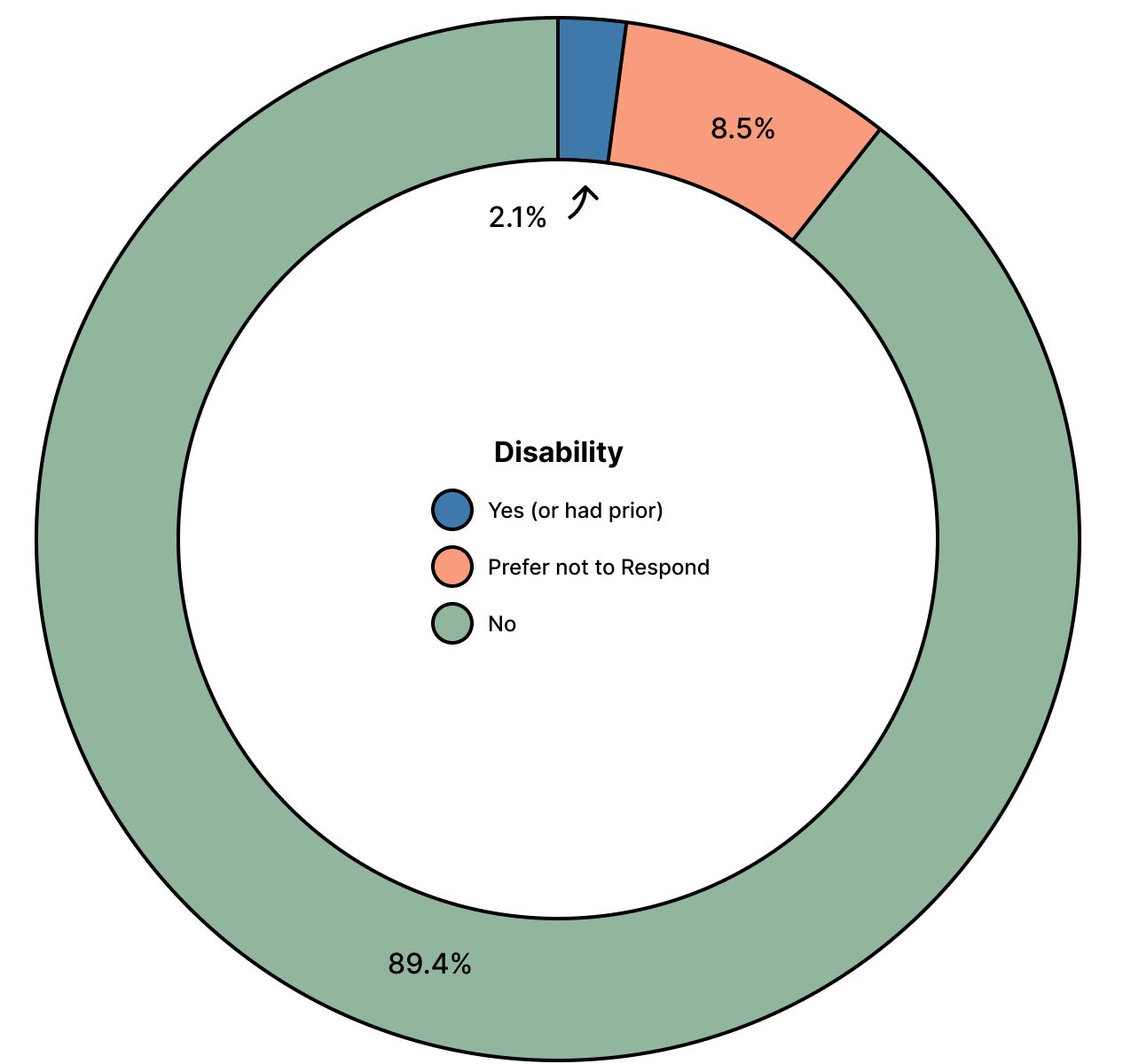
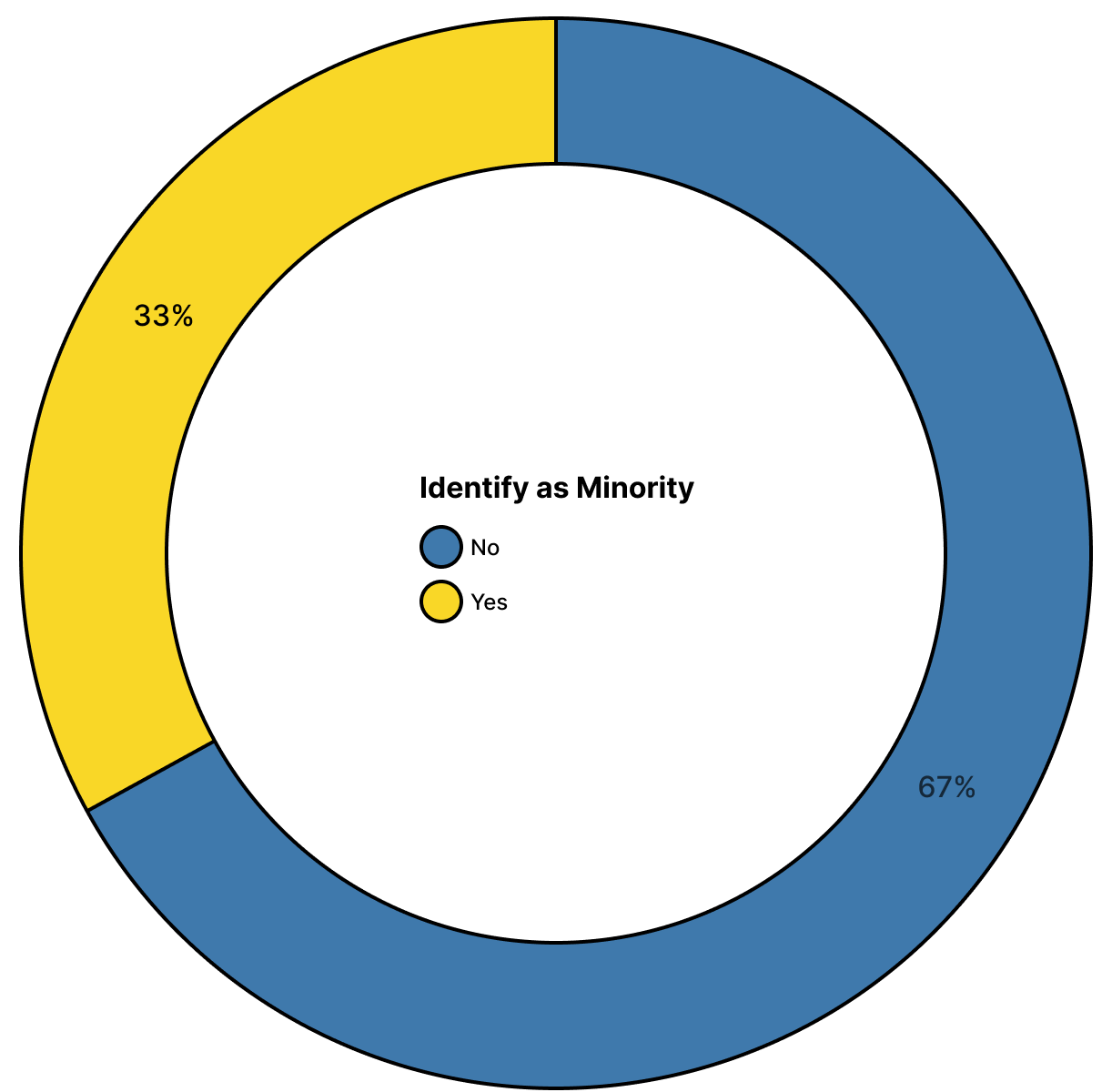
Every year, we collect data on our workplace culture and diversity while respecting privacy and everyone’s choice to self-identify. We do this so we can stay transparent with you and ourselves in the way we hire, promote, compensate, and include workers in decision making. This data is collected from sources required under federal law for Equal Employment Opportunity (EEO) reporting, as well as voluntary surveys, so you can get to know us just a bit better.
44%
Leadership roles occupied by women
53%
Tenure longer than 5 years
25%
Tenure longer than 10 years
Environment
Climate impacts and what we’re doing about it
Our position in the coffee supply chain is a humbling one. Ask anyone in our logistics team about what it takes to move coffee around the globe and you’ll be regaled with tales of impassable mud slick jungle roads, ships knocked out of commission or diverted due to missile fire (yeah, that happened), or massive blizzards freezing rail freight in its tracks. All of those moves take a huge amount of coordination and also fuel. While organizations like the International Maritime Organization continue to rally for more efficient fuel mixtures and decarbonizing ocean bound freight, moving coffee is by far our largest source of emissions.
This year, we’ve updated the way we account for these emissions to bring them in alignment with methods compatible with the Greenhouse Gas Protocol (GHGP) and in preparation for setting and committing to Science Based Targets. We’ve re-scoped our upstream measurements to tier-one suppliers and downstream to the point of delivery with roasters, while also expanding our methods to fully account for the production of burned fuels and their combustion (referred to as Well to Wake/Wheel – WTW). This has made our accounting more comprehensive and shown us where we can improve our data collection and ultimately where we can reduce the impact.
We remain committed to reducing our emissions wherever possible and offsetting the emissions we can’t eliminate. Breaking down emissions by their source type (commonly called an Emission Scope) is a simple way to understand where those emissions come from and what can be done about them.
65t
Scope 1
Emissions from owned or controlled sources. These could come from company owned vehicles, waste disposal, environmental controls, or most often in other industries from manufacturing. At Cafe Import’s scope 1 emissions are mostly from climate control for storing coffee and running the vehicles and forklifts at our facilities. Measured in tonnes CO2 equivalent.
40t
Scope 2
Indirect emissions from the generation of purchased energy. These emissions come from buying electricity from non-clean energy sources and are partially offset by our solar farm in Minneapolis putting out 10.93MWh as well as using 100% clean energy to power our office in Australia. Measured in tonnes CO2 equivalent.
1848t
Scope 3
Emissions that occur upstream and downstream from transportation in the coffee supply-chain, as well as business travel and waste. This is usually an importer’s largest source of carbon as we travel to origin to source coffee, commute to the office, move coffee across the globe, and ultimately ship it to a roaster’s doorstep. Measured in tonnes CO2 equivalent.
*Preliminary results pending third-party verification and offset balancing.
Waste reduction & circularity
We all know that the coffee industry has a shared dilemma — jute — and all of the other packaging materials needed to make sure specialty coffee survives thousands of miles/kilometers of travel and arrives at the roastery safe and sound. Perhaps you’ve been by our warehouse and seen the mountains of coffee sacks, or you’ve gotten crafty yourself and upcycled these materials into bags or wall art. With supply chains being relatively standardized on the size and shape of coffee sacks, liners, and transport methods, the options for reducing this packaging are few and far between. What we can do is make sure that our downstream shipments use recycled, or recyclable and compostable material whenever possible. We also use 100% compostable sample bags for the ~30,000 samples we send to roasters every year and have trialed compostable palette wrap (that search continues, if you know of any that doesn’t degrade during shipping, please hit us up!)
Even if you love our bag art, there’s only so many sacks you can hang on the wall, so we’ve been looking for ways to valorize these materials and turn them into something useful. This has looked like partnerships with community gardens near our offices, supplying researchers with the raw material for exploring how jute can be transformed into fertilizers, and is one of the research areas we’re excited to see tackled by the Center for Circular Economy in Coffee (C4CEC) which we joined last year. Learn more about how anyone can reduce waste in the C4CEC good practices guide.
~300lbs (136kg)
Weight in plastic bags saved from the landfill by using compostable sample bags
74.5%
Of our ~1,459,600lbs (662,063kg) of packaging in 2025 was recycled or recyclable materials
Environmentally conscientious sourcing
We support agricultural methods that minimize reliance on chemical inputs such as pesticides, herbicides, and fungicides, helping safeguard water quality and foster biodiversity. These sustainable practices not only elevate coffee quality but also contribute significantly to the health and vitality of the communities in coffee-growing regions. We recognize, however, that access to organic farming resources isn’t universally available, so we actively partner with farmers who demonstrate a clear commitment to protecting their local environment. In 2025, all coffee we sourced was 100% certified GMO-free, and 17.2% of our total purchases were certified organic.
100%
Certified GMO Free
17.2%
Organic
Community
Both near and far
We don’t see ourselves as sitting in the middle of the coffee value chain; we actually don’t see the relationships and people we work with as part of a “chain” at all. We see our role as a member of a larger community circle, where knowledge and experience are shared, and together we’re greater than the sum of our parts. This is why we’ve invested in our flagship free-to-all education platform ED+U (more on that later), strive to maintain long term partnerships with coffee growers through our stratified buying model, ensure employees get hands on experience by visiting coffee growing areas and customers, and maintain our commitment to donate 1% of net profits to projects that support social and environmental good.
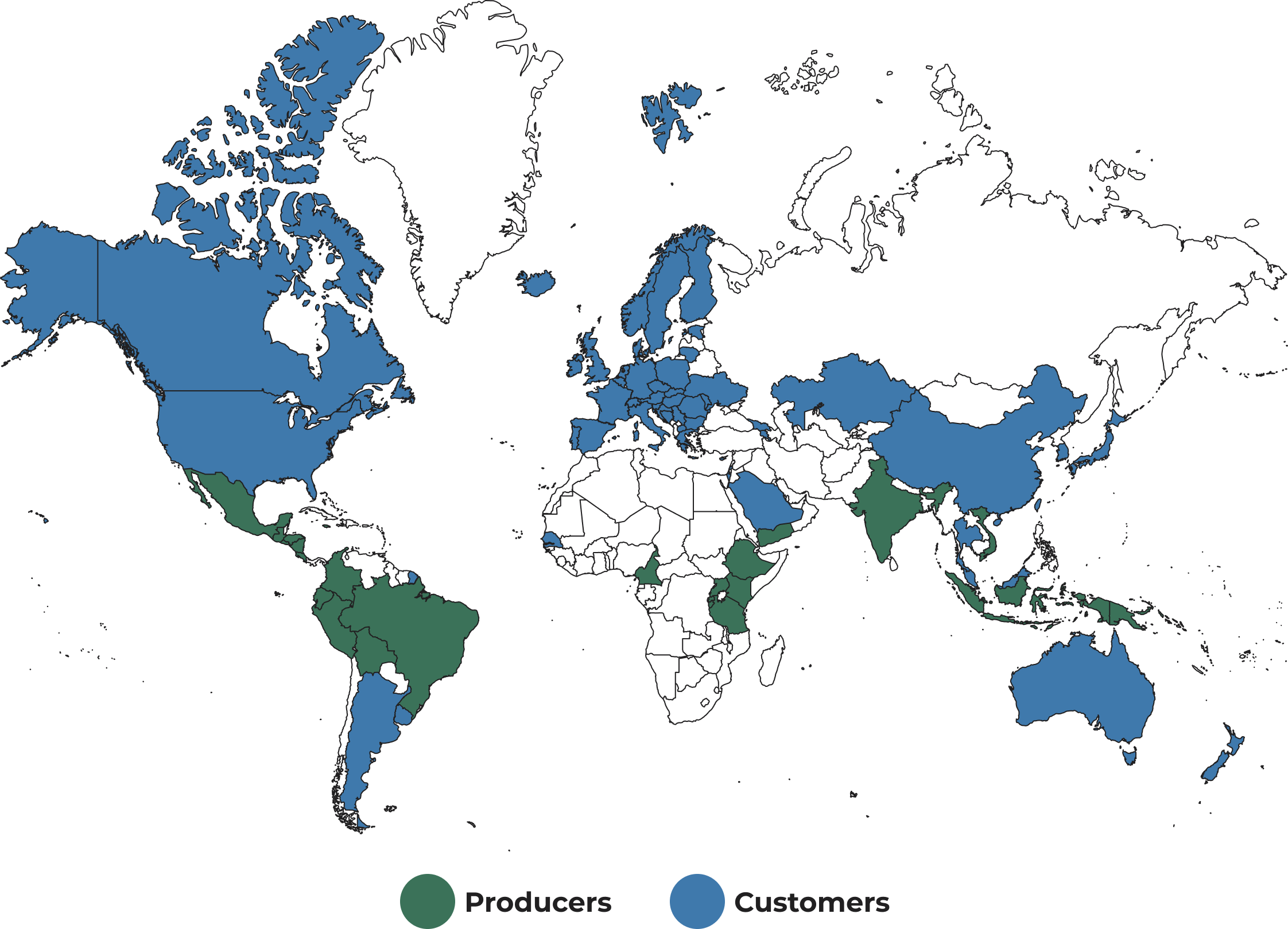
Last year we sourced from 24 Origins and delivered to 58 Countries
134
Active Suppliers
8
Avg length of supplier relationships (years)
33%
Supplier relationships longer than 10 years
Customers and relationship building
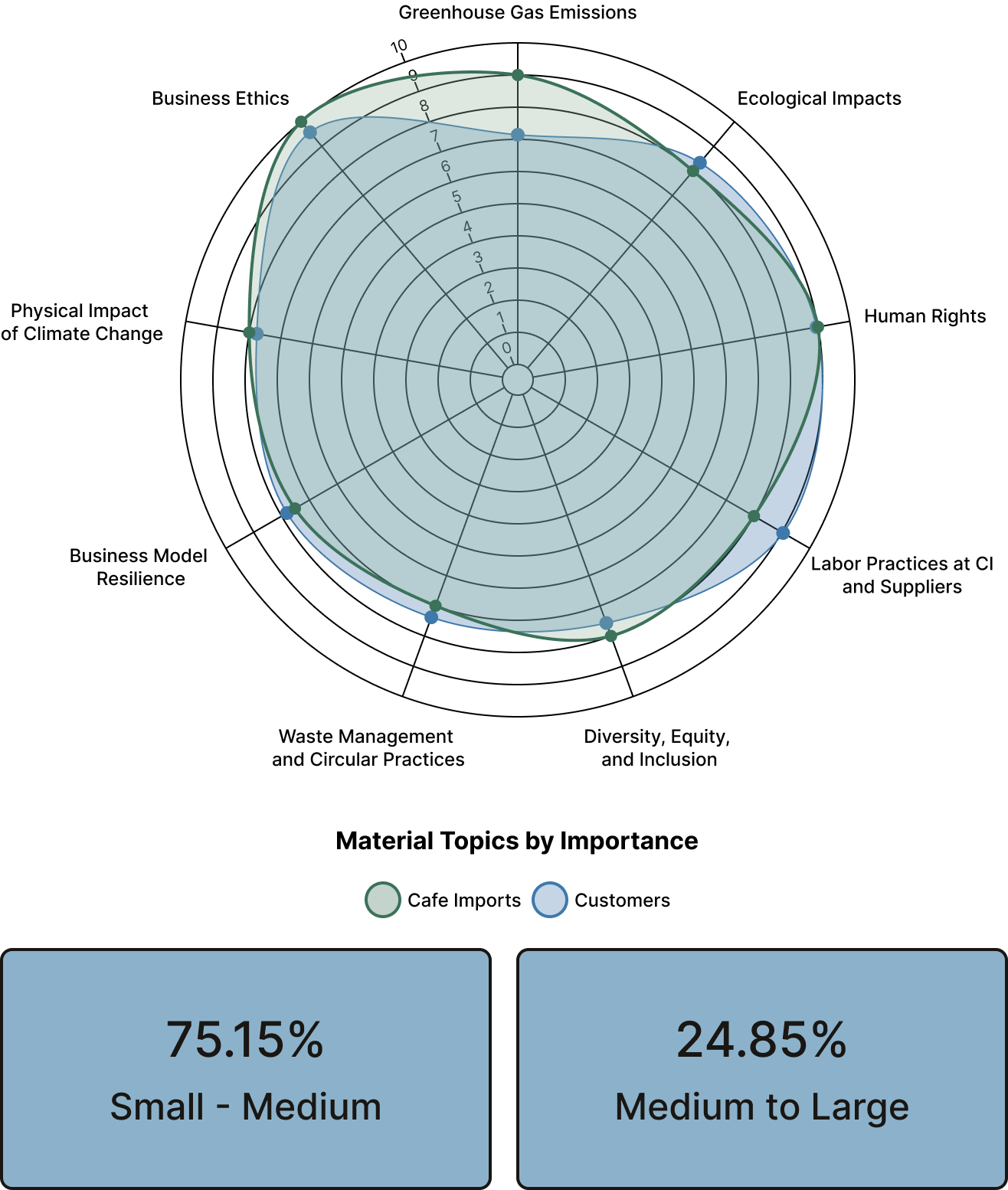
Remember that value circle we spoke about earlier? We’re privileged to work alongside about 2200 customers who are part of it too. From small to medium-sized roasters (about 3/4 of our customers) to folks who have scaled up, the relationship with the people who source your coffee is about more than business; it’s about building long-term trust that we take very seriously, while remembering to have some fun along the way! With this in mind, we maintain always-on feedback channels through email, on our customer portal, and in feedback surveys where we ask the tough questions about what we can do better. We work with roasters of all shapes and sizes, understanding where you are at in your journey from weekend warrior to the city’s favorite spot to sip, helps us tailor our support and tools to better meet your needs.
In our 2025 stakeholder survey, y’all were loud and clear when we asked what we should be focusing on: ethical trade practices, fair labor and human rights, as well as reducing the ecological impacts of coffee remain top priorities — it’s awesome to know we’re in good company!
Notes from the road
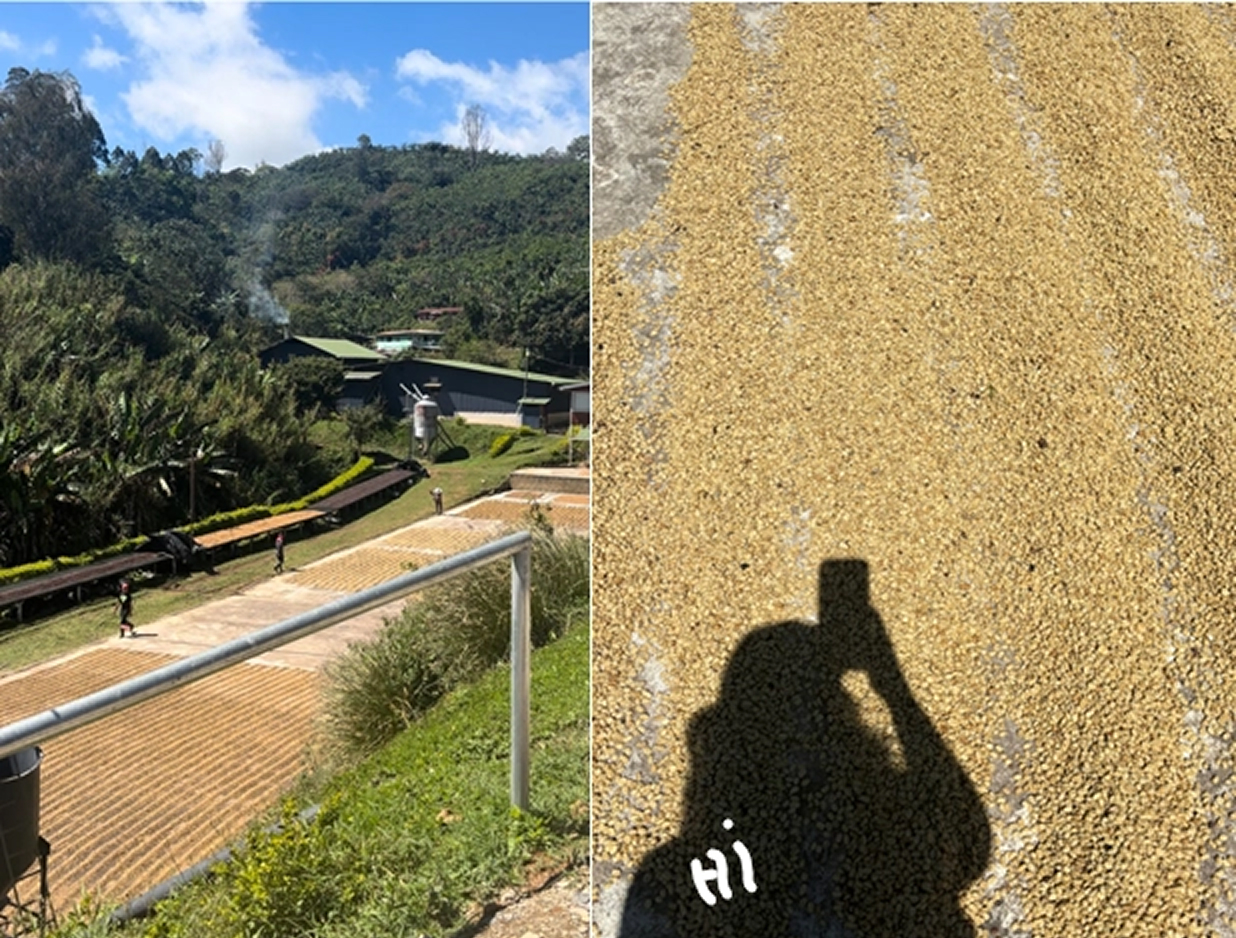
“We spent our afternoon with Ivan Solis – this was a wild time. We met at the farm and immediately jumped into a decent hike. I have no idea how far up we were, but we were way up there. The steep incline gave way to some flat land and surreal views of the valley below and surrounding mountains. Our groups split up exploring and asking questions about each facet of their operation before we all sat together for coffee and lunch. I spotted some Café Imports ‘Product of Distinction’ awards displayed in the café that I thought were quite cool, maybe a bit of a full circle moment.” ~ Nicole | Costa Rica
The last stop for my leg of the trip was to visit The Champ himself, Arnulfo Leguizamo along with Arnulfo’s brother Luis Felipe Leguizamo Giraldo, and Arnulfo’s son Diego. They are leaders in their community and support fellow farmers in their efforts to improve their quality. [our very own] Andrew Miller was a juror at the 2011 Colombia Cup of Excellence, where Arnulfo won first prize, garnering the high bid of $45/lb for Finca El Faldon and the highestyetbid on a Colombian Microlot. I admire Arnulfo for his wisdom, humility, leadership, and commitment to excellence. ~ Simon \\\\ Colombia
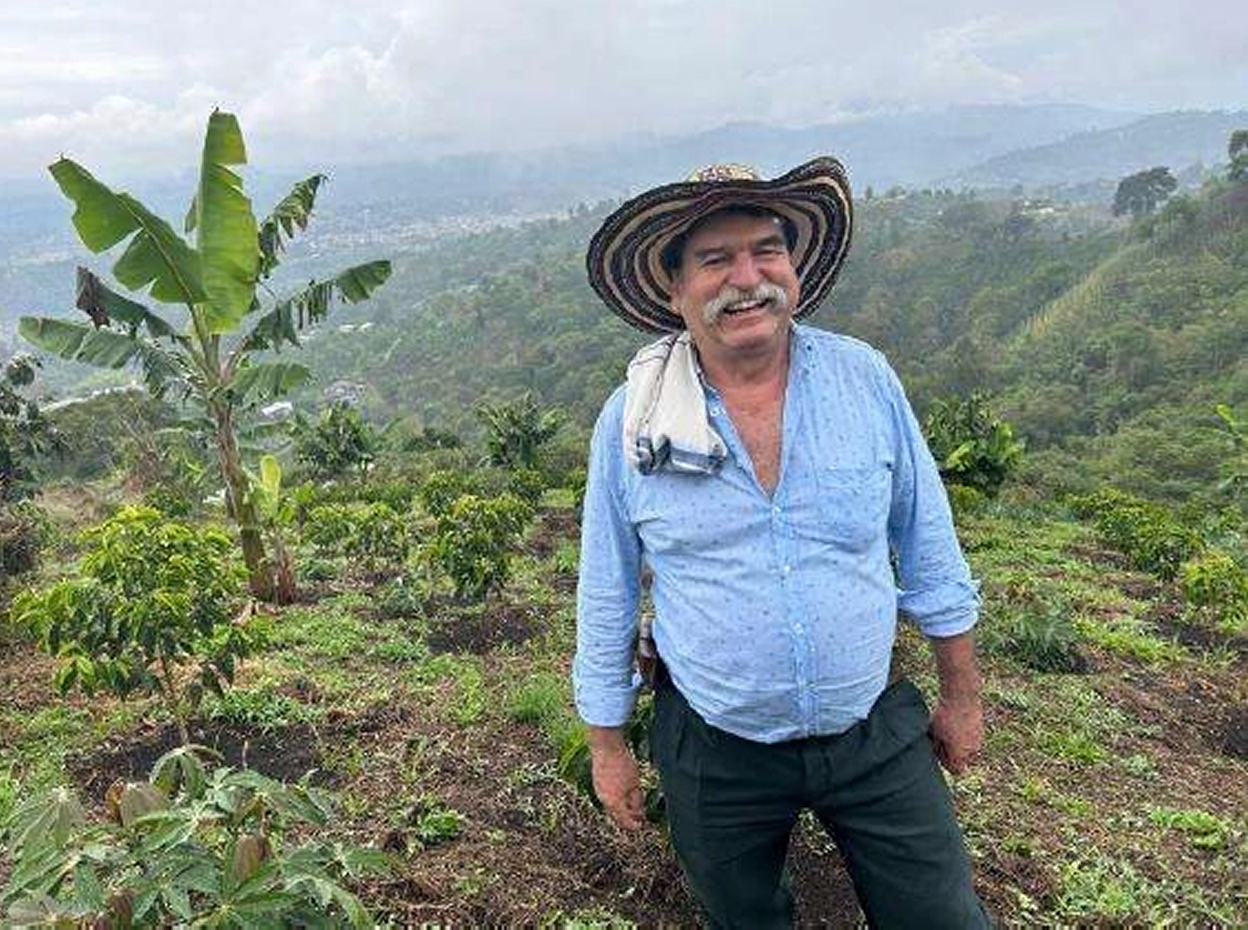
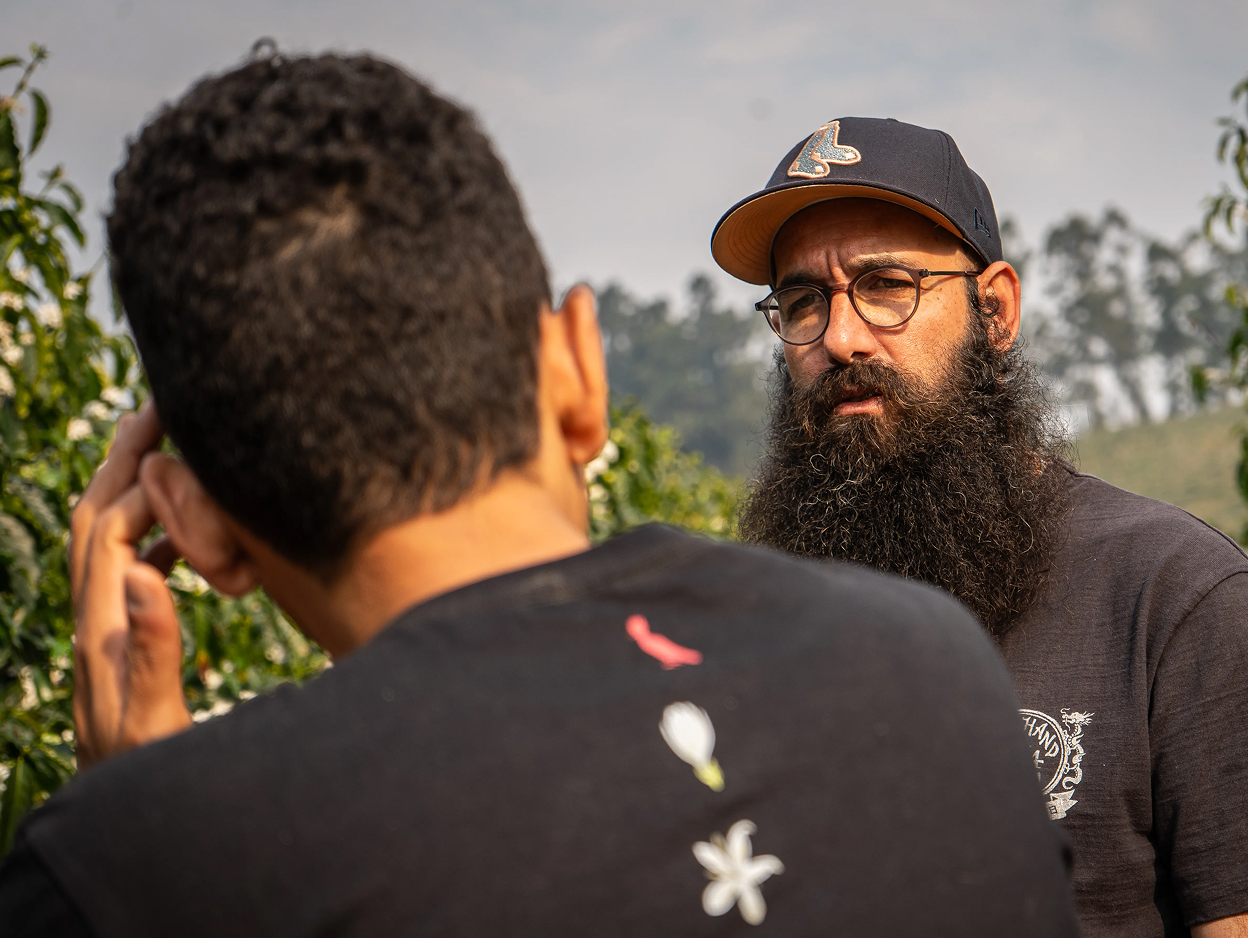
Leading a trip was a terrific experience for which I prepared with the aid of Simone, Luis, and Ian. Alongside the responsibility load part of things, it provided me with an opportunity to strengthen relationships with the producers we visited and customers alike. This as a big reminder that we all do some really valuable work! ~ Daniel | Brazil
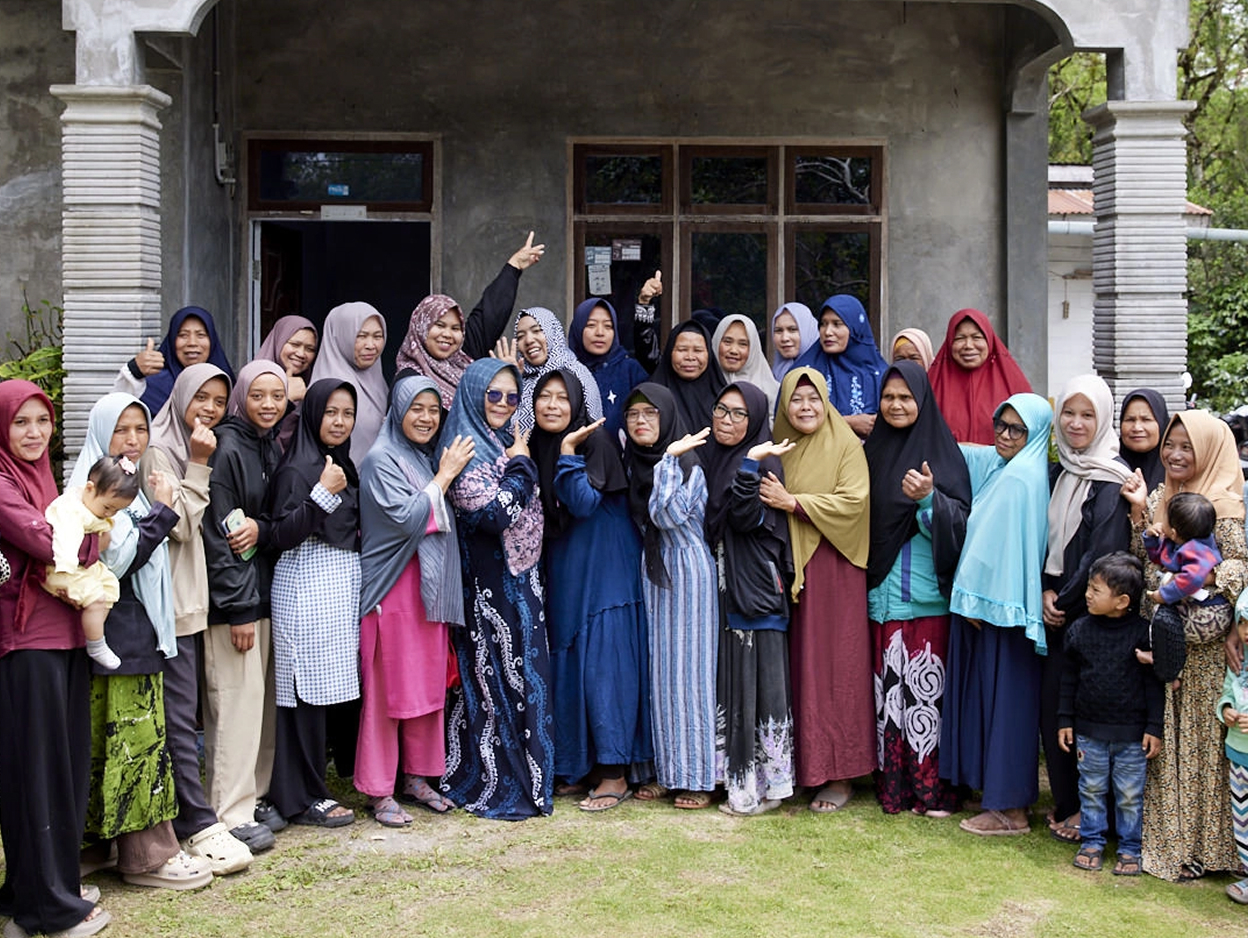
One of the most inspiring visits was to the Women’s producer group of the Garmindo Cooperative (Gayo Arabica Mahkota Indonesia Cooperative), a group of 69 women divided into 8 delegations. Their farms about 1 hectare each, with 1,300 coffee plants on average. They also have a very big social impact in their community…..when asked about the hardest part of being a woman producer, their answer was simple: “All are equal.” ~ Victor | Sumatra
Economic impact and sustainable livelihoods where we source coffee
Four years ago we began publicly sharing our aggregated price premiums each year as a way to bring more transparency to the often obscure world of sourcing and trading. In that time we’ve seen unprecedented instability in the commodity coffee market (if you hear someone say “the C” is all over the place, this is probably what they mean), underscoring the need to talk about the relationship between on-farm realities, quality, price, premiums, and what it all means, more important than ever. Our buying team is constantly evaluating our sourcing choices and the premiums we pay to foster long-term healthy relationships and work towards sustainable livelihoods for all.
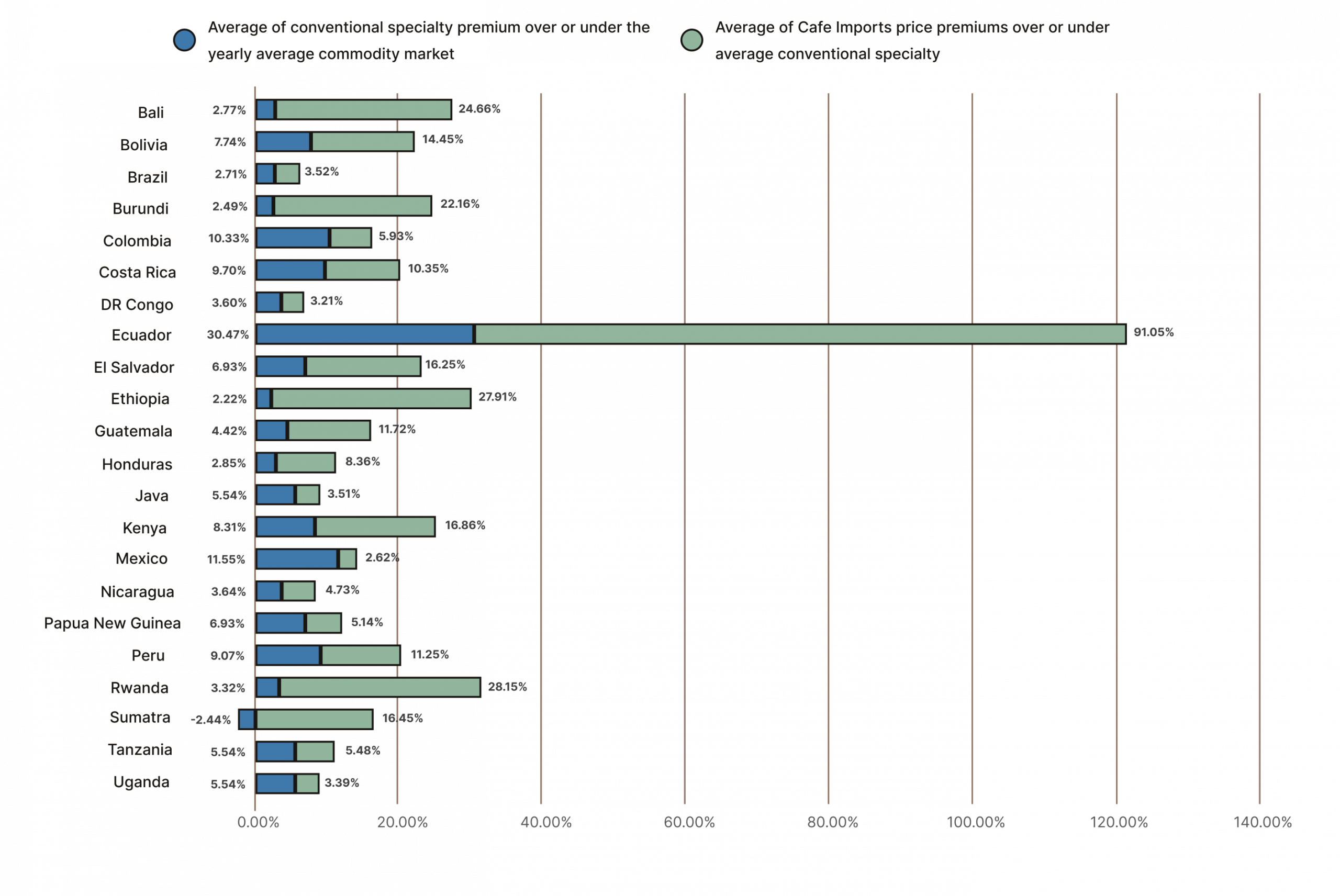
16.41%
Average Cafe Imports Premium over average 2024 C-Market across all origins*
9.40%
Average Cafe Imports Premium over average Specialty Premium across all origins*
*Average price differentials for conventional specialty tracked and reported by our sourcing team. Where differentials fluctuated drastically during the harvest, the average was used. The average Cafe Imports premium across all origins is weighted by purchase volume.
Where to learn more
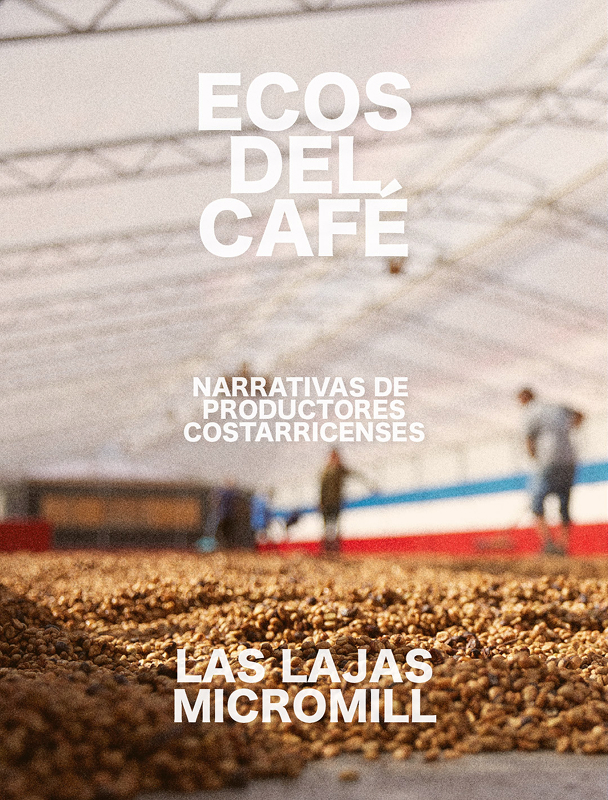
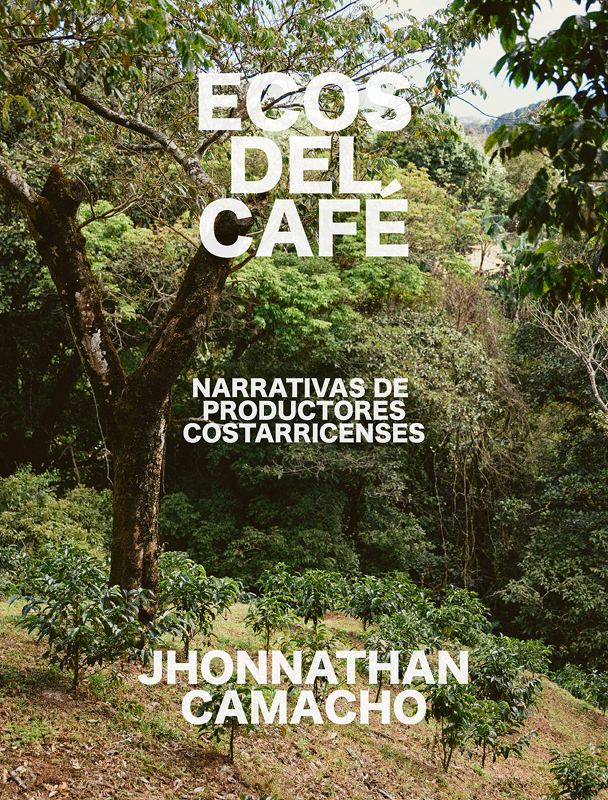
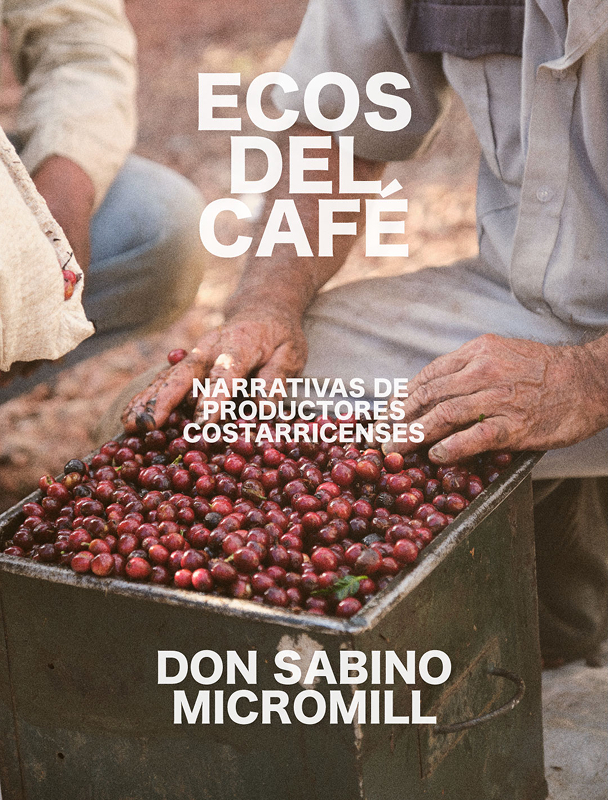
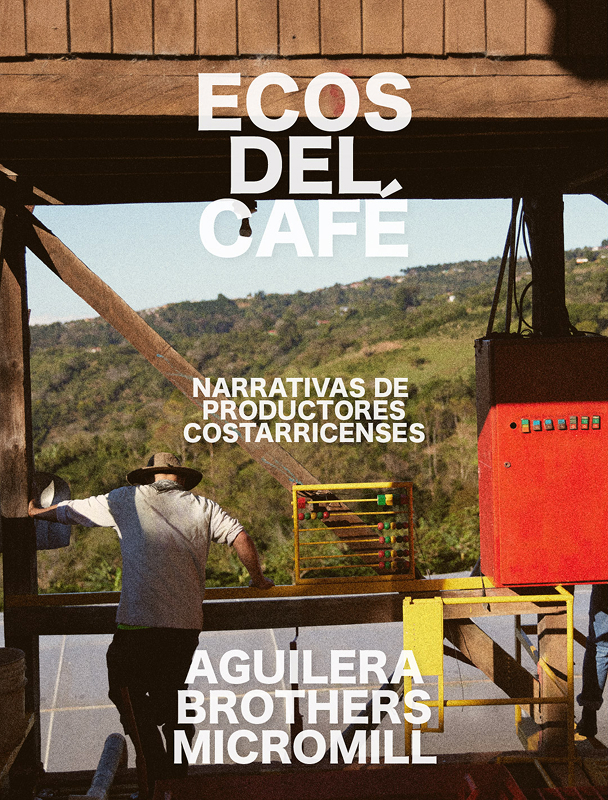
Want to learn more about what this looks like in practice? Check out our ongoing film series “Ecos Del Cafe” for glimpse into how we develop these partnerships and the people behind them. Here’s are a few of our favorites from 2025!
Giving back to the communities we love
Maybe it started as a code name, maybe it’s inspired by the ethos behind this report, probably both. Progress Projects are what we call our efforts to give back 1% of global net revenue to the communities near our offices and where we source coffee. For a third year running, we’re excited to share with you these incredible orgs, with love from the employees of Cafe Imports! Thank you to the organizations and people who continue to give their time and energy caring for these communities. The work you do is incredibly important, and we are honored by the opportunity to support. If you represent a not-for-profit or project that you think might be a good fit for consideration next year, please get in touch.
2025 Progress projects
100% employee chosen, and some amazing folks doing good in our communities. Learn more about them on blog!
Berliner Obdachlosenhilfe | Comunidades Latinas Unidas en Servicio (CLUES) | Funcafé | Guatemalan Relief Assistance for Children’s Education Services (GRACES) | Immigrant Law Center of Minnesota (ILCM) | Minnesota Indian Women’s Resource Center (MIWRC) | Open Arms of Minnesota | Pay The Rent | PFund – Drop Dead(lift) Gorgeous Campaign | Queer Mountaineers | Sanctuary Supply Depot | Wildflyer Coffee | Wildlife Rehabilitation Center of Minnesota
Price premium programs
Supporting gender equality through our Women Coffee Producers program, after school activities for at-risk and underprivileged young people, or the future of coffee farming in a changing climate, these programs are one of the ways customers can support social and environmental programs through their coffee sourcing with us.
Cria Carmo
The communities surrounding coffee growers play a vital role in sustaining the coffee supply chain. In Carmo de Minas, Brazil, we partner with CarmoCoffees to recognize the essential support provided by family, friends, and neighbors. Since 2013, CarmoCoffees has led CriaCarmo, a program offering education, social, and athletic opportunities for at-risk and underprivileged youth. The initiative promotes physical and mental well-being, nurtures young athletes, and fosters a safe space for community engagement. Cafe Imports has supported CriaCarmo since its inception, including $6,500 in 2025.
Women Coffee Producers
Cafe Imports is committed to fostering gender equity in the coffee industry through the Women Coffee Producers Program. This initiative supports women farmers, who often face legal, social, and economic barriers, by sourcing coffee from women’s associations and female members of mixed cooperatives. To help bridge the gap, we aim to pay a $0.10-per-pound gender-equity premium to provide direct financial support. In 2025, this resulted in ~$67,000 in premiums paid directly to women farmers, strengthening their role in the coffee value circle.
World Coffee Research Check-off Fund
This fund is a voluntary program established by WCR in collaboration with participating importing companies to fund their coffee variety research and breeding programs. Any interested customer can choose to add at least one half of one penny ($0.005) per pound to any coffee purchased through Cafe Imports. (Roasters can also choose another amount; many decide to contribute $0.01 per pound.) The total contribution is calculated per sale and included as a line item on a roaster’s invoice. Cafe Imports tracks and collects the funds and remits them directly to WCR each quarter. This year, we collectively donated $7,898.00 in support of coffee breeding programs and field research.
Education and Research
Is at the core of everything we do
We believe coffee thrives when education is accessible to everyone across the supply chain, so our education programs are built on that ideal. There is a wealth of knowledge within our walls and across our networks. As we learn from one another, we do all we can to share that with you. Our classes are open to all without a paywall. We’re always ready to travel together, and we proudly support programs that also work toward a more educated industry.
16
Live classes
249
Attendees
7
Topics
ED+U is coming to U!
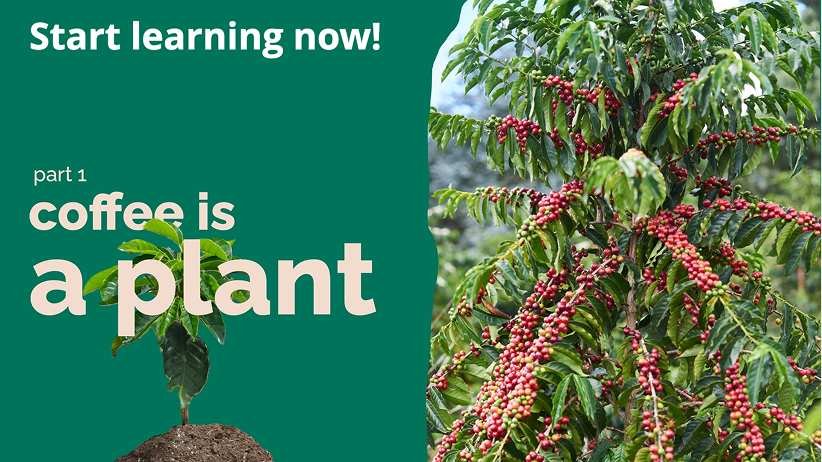
ED+U is now an online academy! Register for the six-part “Coffee Is” curriculum, take it at your pace, and walk away with an ED+U By Cafe Imports certification, all completely free. Registration is open now!
You can also subscribe to our youtube channel to keep up with all of our video content, including recorded ED+U classes and “Echoes of Coffee”, a series of mini-biographies about some of Costa Rica’s best specialty coffee producers. – Followup along
ED+U on the road and at events
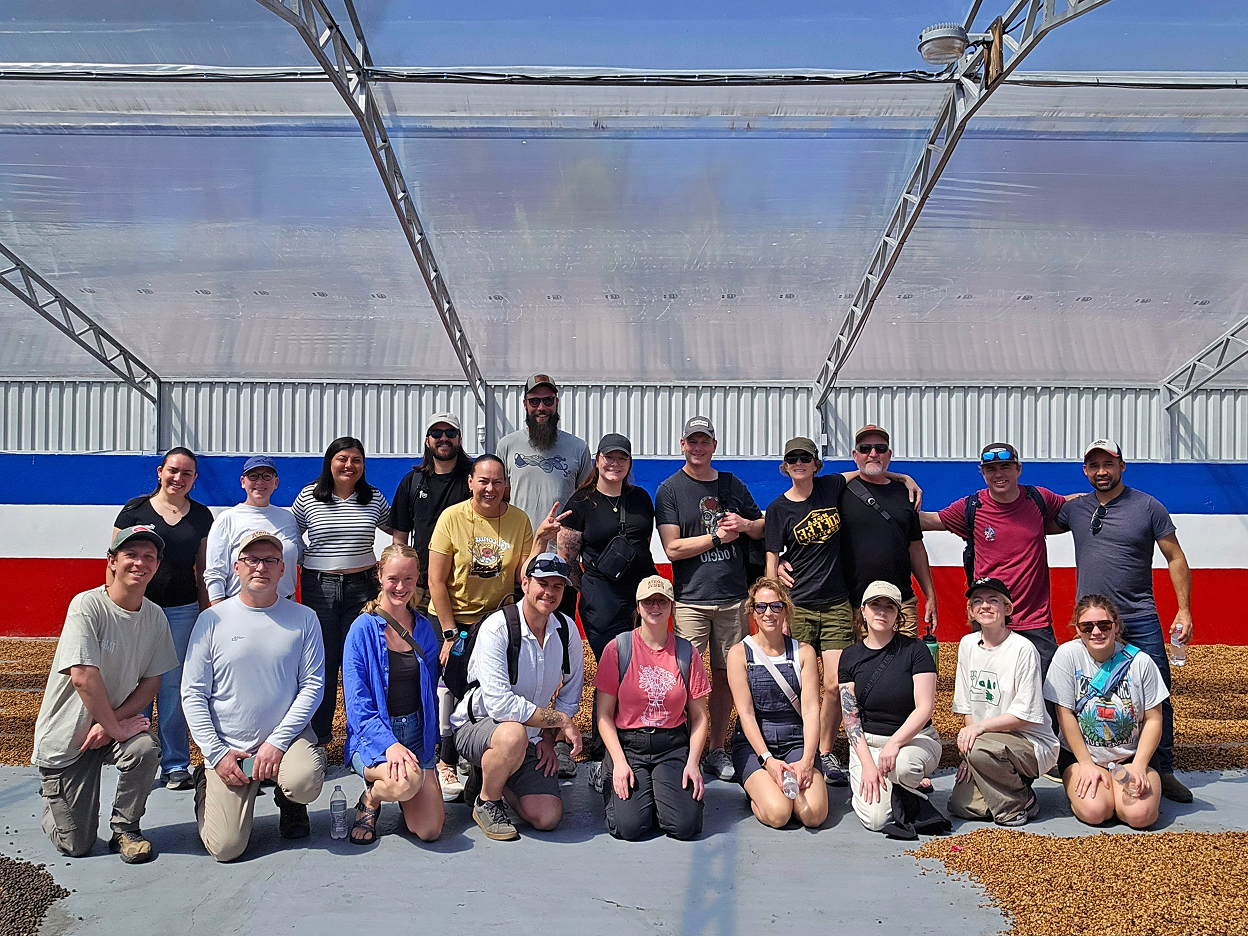
Costa 101 Trip: Educational trip to Costa Rica
Every January, we bring ten coffee professionals of all experience levels to Costa Rica during harvest for a week-long educational excursion. We’re graciously hosted by a handful of Micromills and Cooperatives who give us deeper insight into how coffee actually happens, from harvest to export. Most attendees are first-time visitors to origin, and seeing coffee fruit on the trees and the drying beds can be a revelatory experience.
Sweet Renaissance Coffee Academy: Education-focused partnership program
Just in our backyard, Sweet Renaissance coffee academy offers a 30-hour residency designed to give individuals in underrepresented communities paths toward joining the specialty coffee industry in the Twin Cities. We proudly teach Seed To Cup and Sensory 101 courses and give tours as part of the programming. Our Founder, Andrew Miller, is on the Advisory Board.
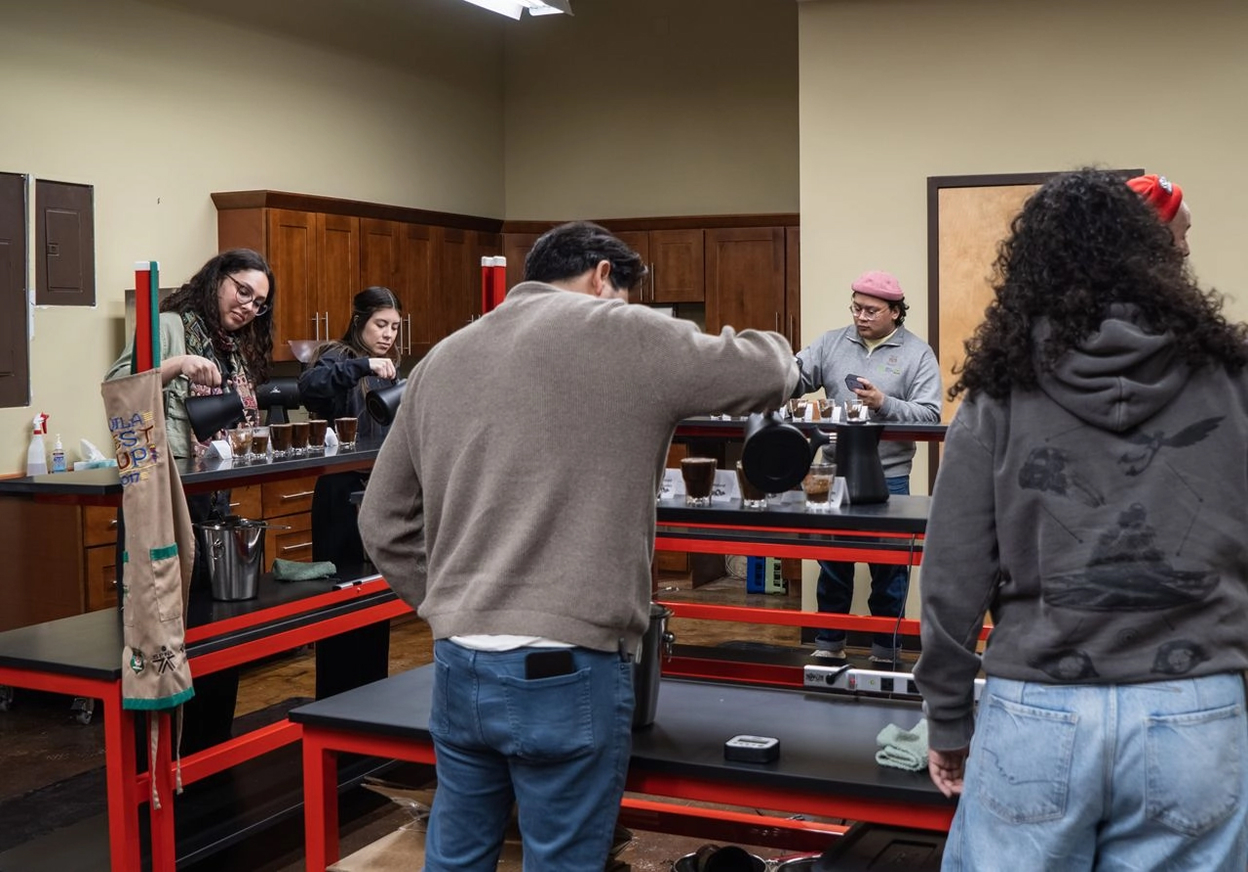
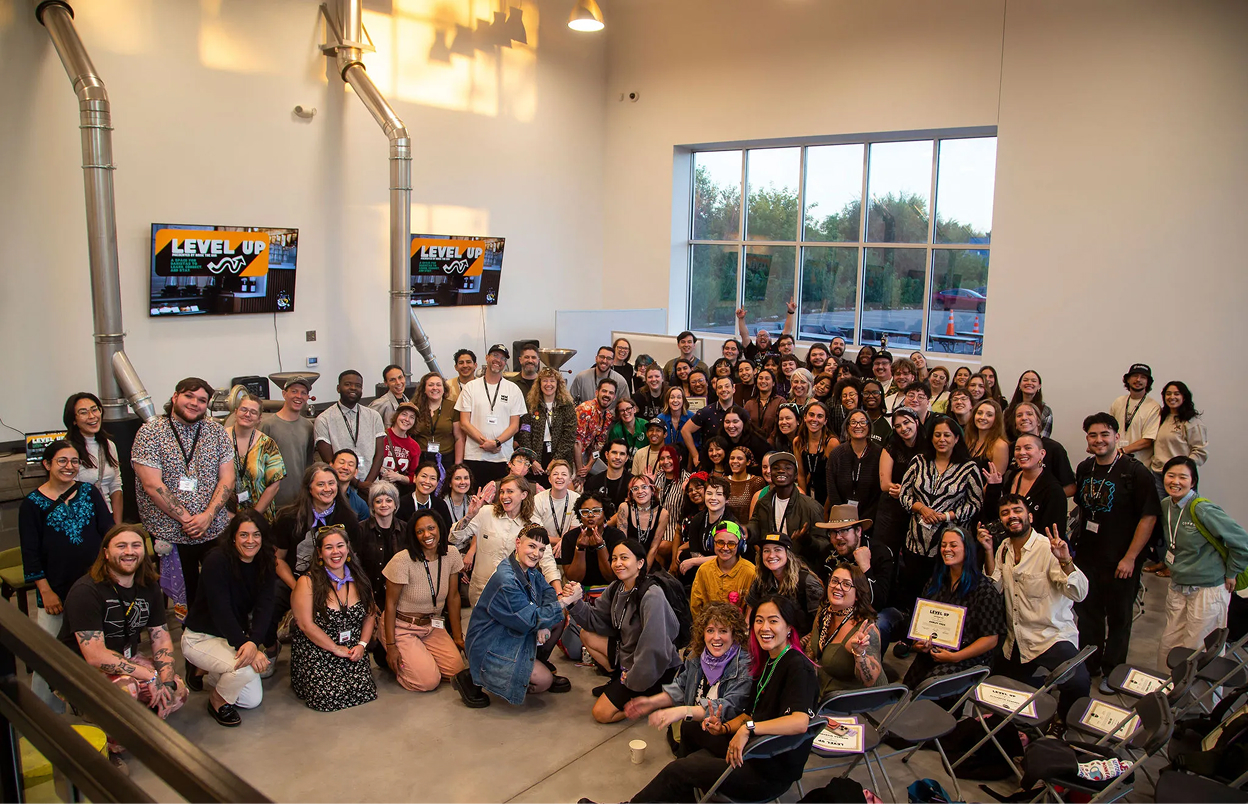
Level Up: Sponsored event hosted in the Twin Cities
We proudly sponsored and participated at the inaugural Level Up event in Minneapolis, organized by the non-profit organization Raise the Bar. The event connected 80+ baristas, roasters, and trainers to 20+ industry-leading coffee mentors and programming in an approachable, fun, weekend-camp setting. We’re excited to participate again in 2026.
Research, collectives, and sharing our love for coffee
We can’t tackle the goals we set for ourselves and the monumental challenges facing the industry alone. The power of collective action drives innovation and solutions to problems that are too big for any one company to take on solo. With this in mind, we actively participate in research partnerships and other coalitions to advocate for making progress on the social and environmental challenges facing the industry as a whole.
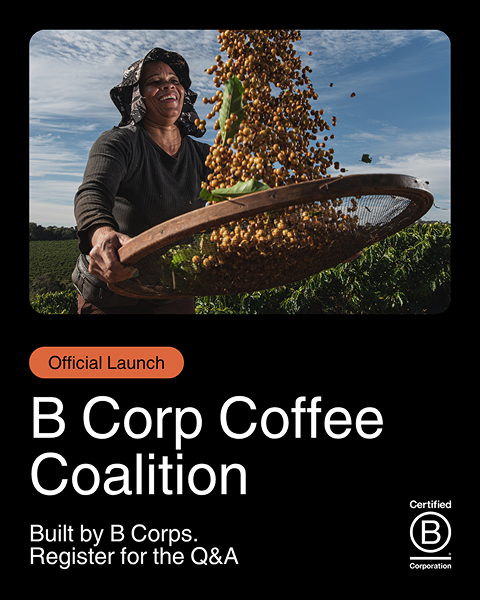
B Corp™ Coffee Coalition
More than nine months in the making through 2025, we’re excited to be founding members of the B Corp Coffee Coalition! A pre-competitive space for coffee B Corps to work together, developing best practices and sharing how we all can fulfill our commitment to put people and planet first. If you’re a like-minded B Corp, or just B Corp curious, you can learn more at https://bcorpcoffee.org

Center for Circular Economy in Coffee
We joined the Center for Circular Economy in Coffee (C4CEC) in 2024 to learn, contribute to the knowledge base, and support the creation of resources that help everyone reduce the waste they create, increase profitability, and restore the environment. The Center is a pre-competitive think-tank corralled by the working to bring the industry’s brightest together to put the massive amounts of coffee pulp, grounds, and byproducts to work.
Specialty Coffee Transaction Guide
Six years running we’ve donated our contract data for crunching in the Specialty Coffee Transaction Guide, an anonymized price discovery tool for specialty coffee compiled by researchers in collaboration with Emory University’s Goizueta Business School. This guide is a snapshot into the complex interactions between quality scores, purchase volumes, and origins across the industry.
Looking Ahead
Since we became a benefit corporation (B Corp) in 2023, we’ve published this report yearly with the aim to constantly improve, share with you the things we’ve learned, and shape the way we do business. Sometimes that path is clear, and sometimes we’re all in the fog together. The instability coffee faced in 2024 continued into 2025 in response to extreme weather events, trade uncertainties, and, as we all know — tariffs.
Navigating the ripple effects felt around the world has been a challenge for everyone at every touch point. But one thing remains consistent, we’re proud to be facing and overcoming these challenges with people like you.
From all of us, thank you for being a part of the journey and pushing to make progress. We’re really glad you’re here.
~ The Crew at Cafe Imports