
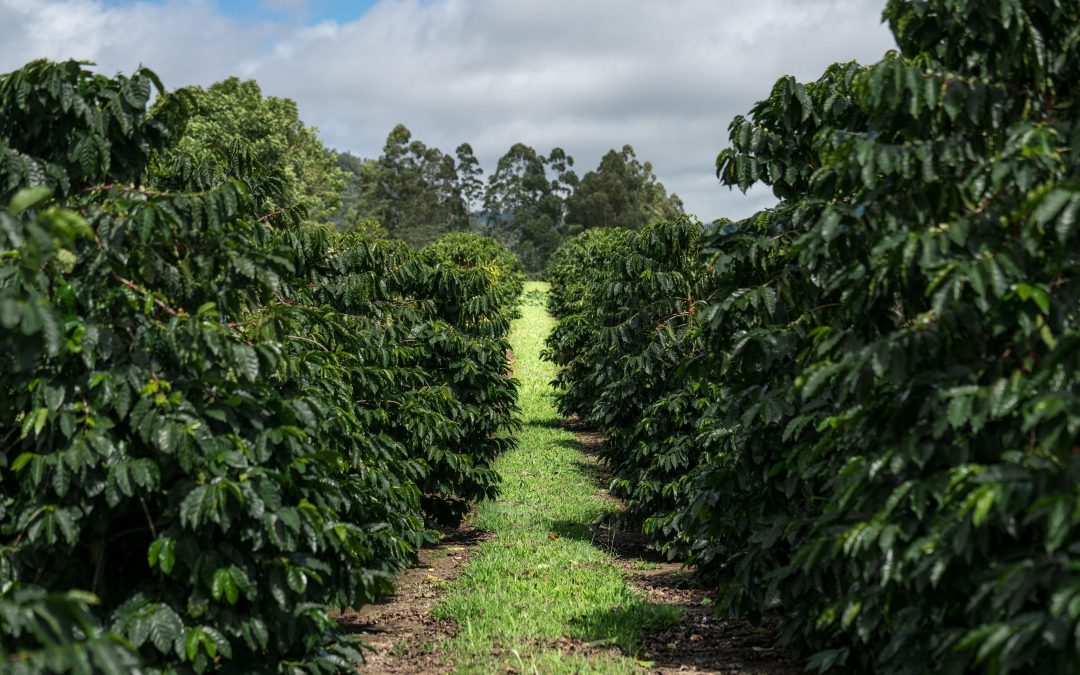
Critical Coffee Plant Research Initiative in Congress
CPHIAA Amendment to reach Congress later this year.
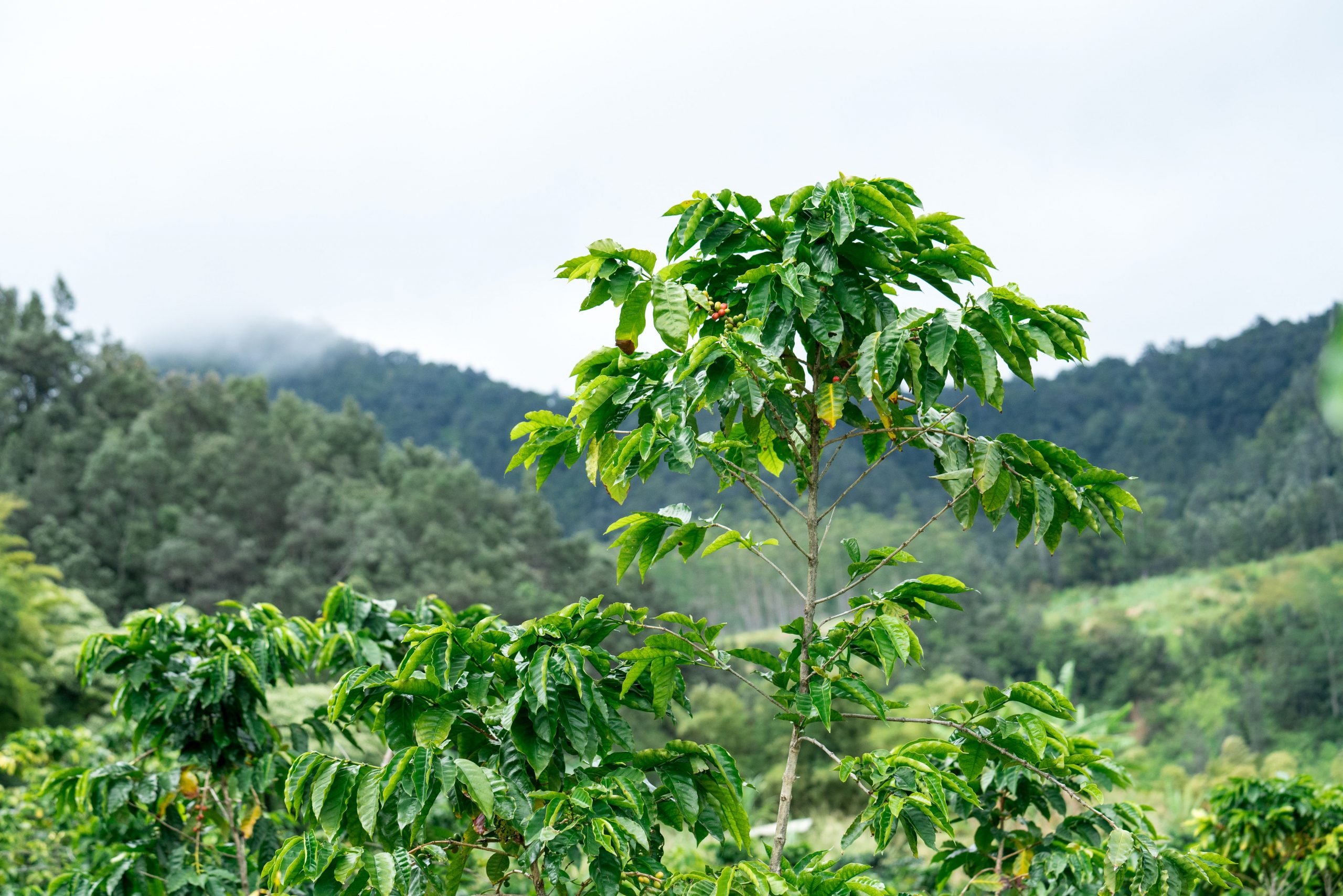
CPHIAA Amendment to reach Congress later this year.
The Coffee Plant Health Initiative Amendments Act (CPHIAA) is a bill proposed in Congress by Representative Jill Tokuda of Hawaii. The purpose of this bill is to support the research of crop diseases such as Coffee Leaf Rust (Roya) and Coffee Berry Borer (CBB).
Cafe Imports views this proposed addition to the 2023 Farm Bill as critical for helping disadvantaged farmers. Research leads to important developments in disease-resistant hybrids and best practices for managing and avoiding diseases that threaten coffee. US Government investment would benefit coffee producers not only in Hawaii and Puerto Rico, but around the world as well.
Our very own Andrew Miller was recently quoted in an article by the Global Coffee Report, saying:
“If Universities in wealthier countries can develop solutions, those can be shared with [financially-disadvantaged] farmers in the rest of the world. This bill is extremely important. That’s why I, and some of my clients wrote to our representatives about it. We’re pleased to be a part of this project.”
The article also mentions that the dairy industry along with US sugar producers support the CPHIAA, stating, “…when coffee does well and grows, so do the folks who supply and sell milk and sweeteners”. The initiative must pass both houses of Congress prior to making its way to the President’s desk.
We encourage all of our customers to reach out to their congressional representatives to advocate for the bill and the future of specialty coffee.
Read the article by Global Coffee Report in its entirety on pages 18-21.
Earlier Posts
Steps Toward Gender Equity: A Bit about Our Women Coffee Producers Program
For the past few years, we have been growing a Women Coffee Producers program, sourcing coffees grown by women-run associations or by the women members of mixed-gender co-ops. We pay a gender-equity premium for these lots in order to support projects or initiatives of the women producers’ choosing. This year, we also hosted a Resource trip to visit two women’s associations, bringing along a group of women roasters who buy their coffees through this program.

Cafe Imports Invites You to Participate in the World Coffee Research Check-Off Fund
We are pleased to invite roaster of all sizes to participate in the World Coffee Research check-off fund through their partnership with Cafe Imports! Read more about how small change from you can make big change for coffee.
Espírito Santo, Brazil: Fashionably Late to the Party?
Have you ever shown up for a birthday party a week late (or a week early)? Of course it’s a little embarrassing at first, but it can also be an opportunity to, you know, just have an extra party, right? Some of the origins we work in are a little bit like that party bonus, except it’s not that they arrive at the wrong time—they just party on a slightly different schedule.
Colombia Best Cup 2018 – Registration now open
Colombia is a special place to us in general at Cafe Imports, but it’s also the coffee-growing country where the Best Cup competition was born: Along with our partners at Banexport, we created this regional competition to highlight the best and brightest within several of the country’s specific growing areas, beginning with Cauca and Huila. For this year’s cupping contest and auction, we are thrilled to expand our reach to the Nariño and Tolima departments in order to discover even more top-shelf lots from the world’s best smallholder producers.
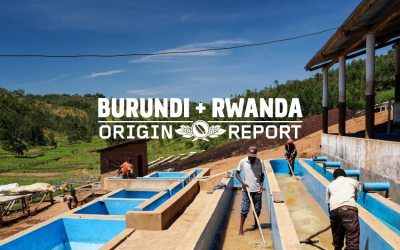
Origin Report: Burundi + Rwanda 2018
The two tiny Central African countries of Burundi and Rwanda could practically be a geographical Venn diagram, despite the actual political border that separates them. Their landlocked status, cultural history, and relative remoteness make them seem easy to lump together as coffee-producing nations. If you visit a household in either country, you’re even likely to be welcomed in and served a plate of ugali, a porridge-like staple made from boiled cornmeal or flour with water or milk.
For all the similarities between them, however—including how significant coffee is for both—the two countries are distinct to us as origins, despite very often getting lumped together.
OMG, It’s a Brand-New Cafe Imports Website!
It’s a little meta to write on your new website about your new website, but we’ve got a new website, and we’re feeling pretty happy about it!
Previously, on “Variety: Unknown…”
Cafe Imports longtime green-coffee buyer for Colombia, Andrew Miller had seemingly stumbled on exactly the type of coffee mystery we love: He tasted something on the cupping table that he could hardly describe, let alone identify. What *are* these mystery coffee beans?

SCA Expo 2018 Flavor Station Recap: Do You Have Good Taste?
This year at SCA Expo, we wanted to have a little fun with flavor, while also gathering data about a (very) random sample of coffee professionals in order to continue asking ourselves about our competency as tasters, and how we can improve—both within our ranks at Cafe Imports, of course, but also how we can help others improve, especially the folks we work with all along the supply chain.
For the three days of SCA Expo 2018 in Seattle, we set up a Flavor Station at the Cafe Imports booth, with different things to taste each day. The idea was to offer show-goers an opportunity to stop for just a minute, taste something other than coffee for a change of pace, and maybe get a small sense of what we are doing when we taste coffee in the cupping lab—something a bit more nuanced and hopefully more constructive and practical than a simple “Loved it,” “Hated it.”
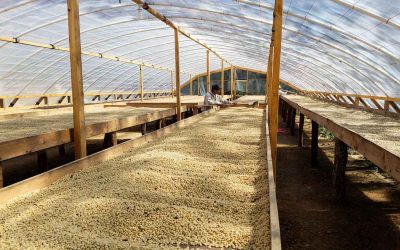
Perfect Strangers: A Sourcing Story
Every stranger might be the friend you haven’t met yet, and in coffee, the way we meet each other is sometimes simply a matter of pure chance and in unusual circumstances.
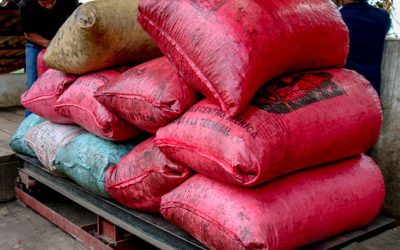
Origin Report: Mexico + Guatemala 2018
Sometimes the easiest things to overlook are those that are right under our noses-or, in the case of Mexico, perhaps right under our borders. Mexico should have everything going for it as a growing country: Its close proximity to the U.S.A. means shipping and receiving coffees is a relative breeze. It’s full of good varieties farmed sustainably, with a high percentage of certified coffees (both Fair Trade and organic). And it has huge development potential from a quality standpoint. Yet Mexico has seemed to be passed over unenthusiastically for the past few years, considered best for “bulk” or blending lots that are hard to get excited about.
Perhaps ironically, however, Mexico’s neighbor to the south, Guatemala, is one of the darlings of the Central American growing region – a reputation deservedly granted thanks to the exquisite profile and general stable productivity there, of course – but the contrast in impressions among the two countries has inspired us to ask whether the grass is really greener on the other side? What difference does a border make? How can we bridge that gap not only in our perception of the coffees, but also manage to equalize them to and with our customers?
Read more for our latest origin report from Mexico and Guatemala, coffee-growing neighbors who have been around the block a few times.
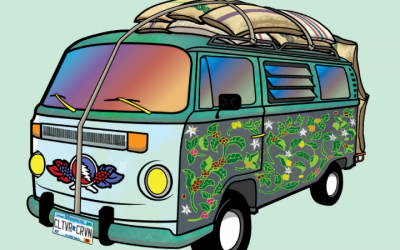
Legendary Coffee Tour 2018: Cultivar Caravan
Cafe Imports is packing up the tour bus and heading out to 10 cities across the U.S.A., bringing along a little bit of something for everyone out there. We’ll be tasting and talking about the history and significance of varieties in coffee—and finally putting an end to that “variety” vs. “varietal” debate—as well as discussing some of the current research, new hybrid development, and other interesting news going on right now in the field.
There will be plenty of non-coffee stuff to taste as well, as we explore varieties in other things we like to consume, and we’ll have the chance to celebrate the diversity of flavor and genetics that having more than one type of anything allows.
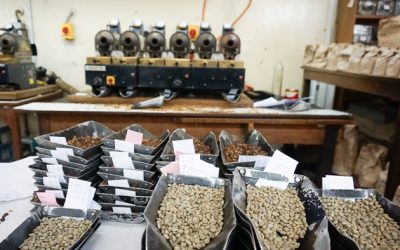
Origin Report: Kenya 2018
Kenyan coffee is undoubtedly some of the most complex in the world—in more ways than one.
Starting with the most obvious, coffees from this beautiful East African country are big, colorful mosaics of flavor, and tasting the best of the best Kenyans can feel like the coffee equivalent of standing directly inside a rainbow with your mouth open, as if you could taste color.
Then there’s the complicated way that the market operates there: Traditionally dominated by the generations-old auction system, buying specific, individual lots is no easy feat, and not for the weak of heart or light of palate.
Perhaps the most complex thing about Kenyan coffee, however, is the set of ethical questions it raises for us, and the challenges it presents to us as a square peg we have spent decades trying to fit into the round hole of traceability, partnership, and consistency.