
Break It Down & Brew It Up: Coffee Cascara
What is Cascara?
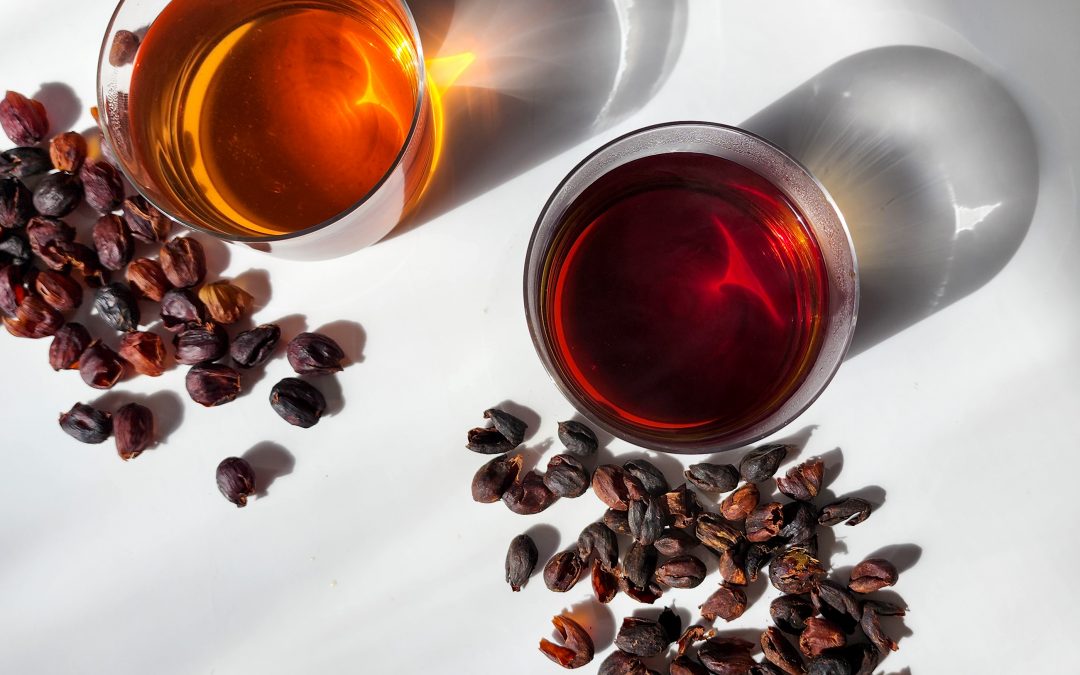
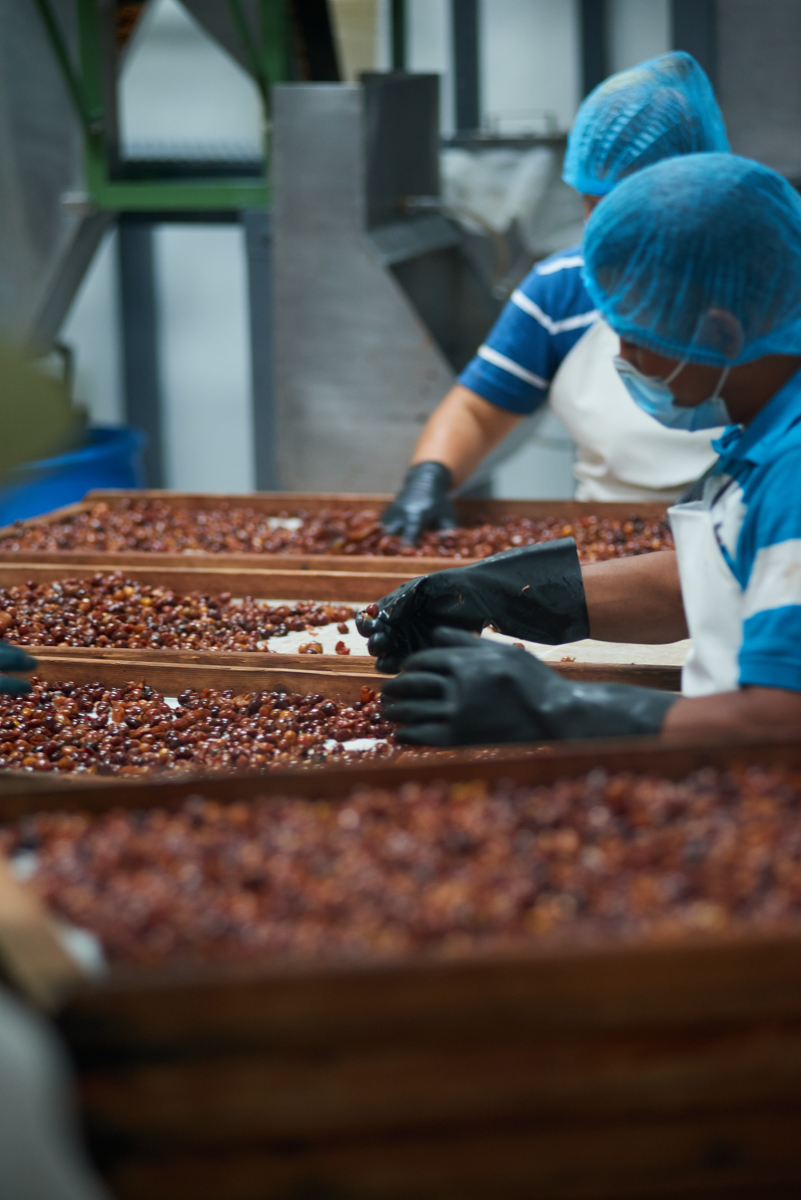
When coffee is processed, the layers of skin, fruit, and parchment are broken down and removed, leaving behind the seeds we roast and brew. Those discarded layers once provided life and protection to the seeds, but don’t have to all go to waste. The skin of the coffee cherry can be dried and sold as a singular product called Cascara.
Cáscara is a Spanish word that translates to peel, shell, rind, husk, and skin. Countless organic and inorganic objects have an outermost layer, so it’s important to note that this Spanish word isn’t exclusive to the coffee cherry. As this product has trended in interest over recent years, though, “Cascara” has become the moniker for dried coffee cherry skin.
This dried fruit skin can be brewed with hot water to make a tea-like beverage that carries the flavor of the dried coffee cherry into the cup. For those that have never tasted it, it has a tart, raisin-like flavor with a mild fruit rind bitterness that is fascinating on its own and can also be used as an ingredient in a mixed drink.
Why Cascara?
Specialty coffee shops have evolved into a morning convenience and a culinary experience. Our culture’s appreciation for fine food and drink has led cafes to curate menus that offer high-end coffees, specialty teas, seasonal signature drinks, and full-service food options. How does cascara fit into this service model?
Simply said, cascara is coffee. It’s a singular ingredient from a coffee tree. Seeing, touching, and smelling the skin that encases the seeds we’re so familiar with deepens our understanding of the plant. This tactile encounter with the cherry continues the education that cafes offer their customers. It provides another moment for questions to be asked, cultivating more trust between the barista and the coffee drinker. Ultimately, serving cascara places more impact behind the fact that, above all else, coffee is an agricultural product that must be carefully tended to if it is to become our everyday beverage. For producers, cascara can be another source of income rather than a byproduct. If producers sell their cascara, then less time and resources are being spent on disposing or composting. Offering cascara is one more small way cafes bridge the gap from producer to consumer.

Brewing Suggestions
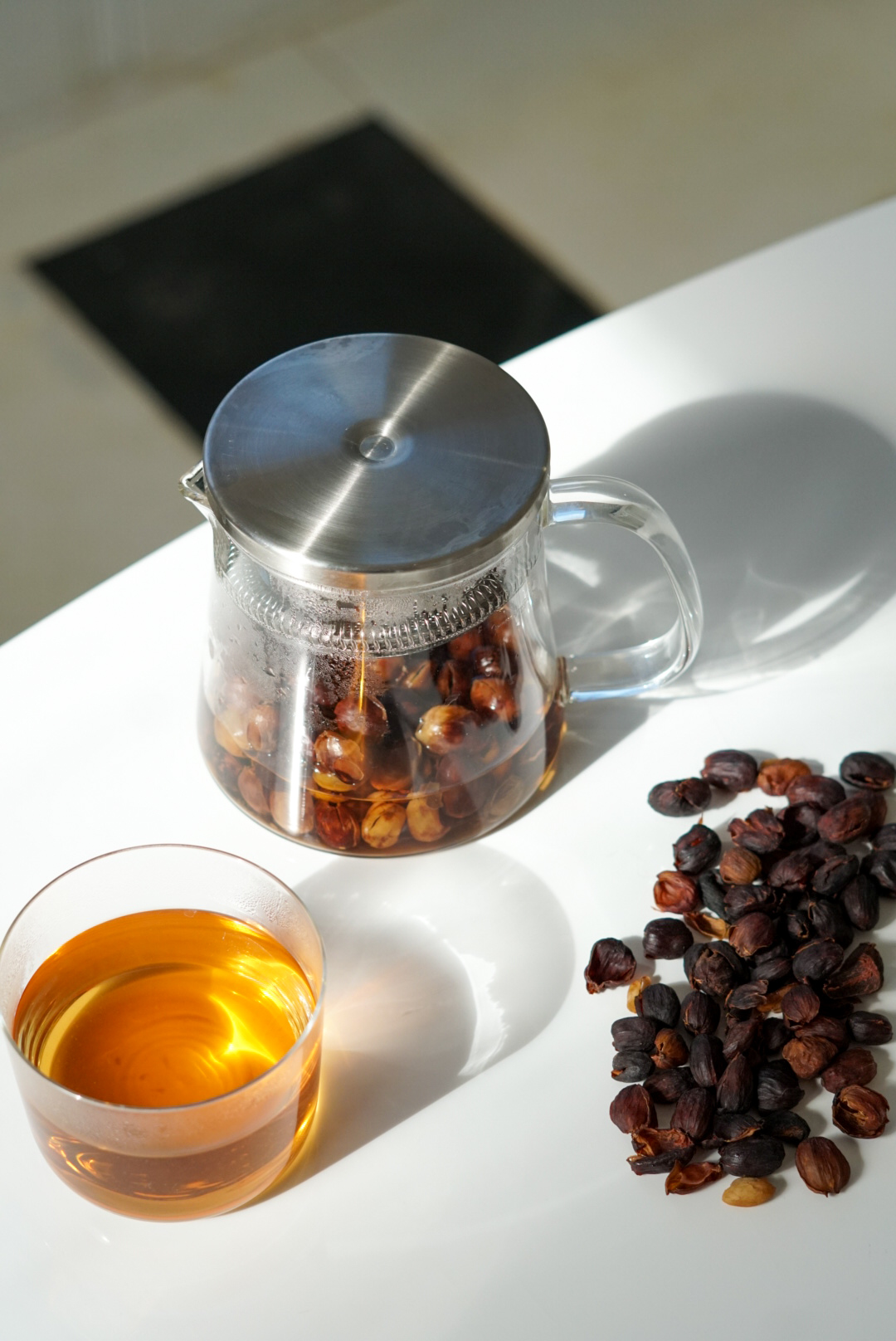
Cascara is brewed like tea – steeped in hot water. The beverage is a unique expression of coffee with about a quarter of the caffeine. There is no standardized recipe to brew cascara, so we recommend you experiment with the cascara-to-water ratio to determine your desired concentration. We suggest brewing with a similar concentration to black coffee (1:16). For cafes, recipes can be scaled up or down as needed.
Hot Cascara Tea
- 10oz brew: 24g cascara steeped in 400g water at 205-208° for 5:00
Iced Cascara Tea
- 16oz iced brew: 24g cascara steeped 200g water at 205-208° for 5:00. Strain and immediately dilute with 200g of ice to chill, and then add ice.
Batch Brew Cascara
You can even use your batch brewer for large quantities! Dose the dry cascara into a large water pitcher and run a brew cycle onto it. After the cycle is done, filter the cascara out through a strainer or toddy filter. Bottle the tea, refrigerate, and use for service.
- 1-gallon brew: 230g cascara to 1 gal (3785mL) water at 205-208° for 5:00-7:00.
Signature and Seasonal Drinks
The dried-fruit sweetness and fruit-rind bitterness of cascara are reminiscent of dark liquor, and that’s a great way to approach the ingredient when creating a signature drink. Cascara pairs wonderfully with citrus acids, spices, and fruit or sugar-browning flavors. Adding flavored syrup to cascara tea is a simple starting point for creating a unique drink. For more complex drinks, try brewing a cascara concentrate or creating a syrup.
Concentrate suggestion
You can brew cascara as concentrated as needed. I suggest starting with a 1-to-10 ratio and using small amounts of the concentrate as an ingredient in drinks.
- 12oz of concentrate: 40g cascara steeped in 400g water at 205-208° for 5:00
Drink ideas using cascara concentrate
- Dark and Stormy inspired:
- 3 oz cascara concentrate + 6oz ginger beer + 1oz simple syrup + .5oz lime juice + ice
- Arnold Palmer inspired
- 3oz cascara concentrate + 4.5oz sparkling or still water + 1.5oz lemon juice + 1.5oz simple syrup
Cascara Syrup suggestion
There are two approaches to infusing cascara into a simple syrup. The first method is to make a simple syrup by boiling a 1:1 ratio of water and sugar until the sugar dissolves and then adding cascara to the hot syrup, infusing for 5-10 minutes before straining and bottling. The other method is to brew a cascara concentrate and then boil that concentrate with sugar to create the syrup. Add other ingredients to create a unique flavor for your menu!
Cascara syrup works wonderfully in fall drinks. Try it in a latte, chai latte, or apple cider.
Cafe Imports’ Cascara Offerings
Costa Rica Helsar de Zarcero Coffee Cascara Tea 19715
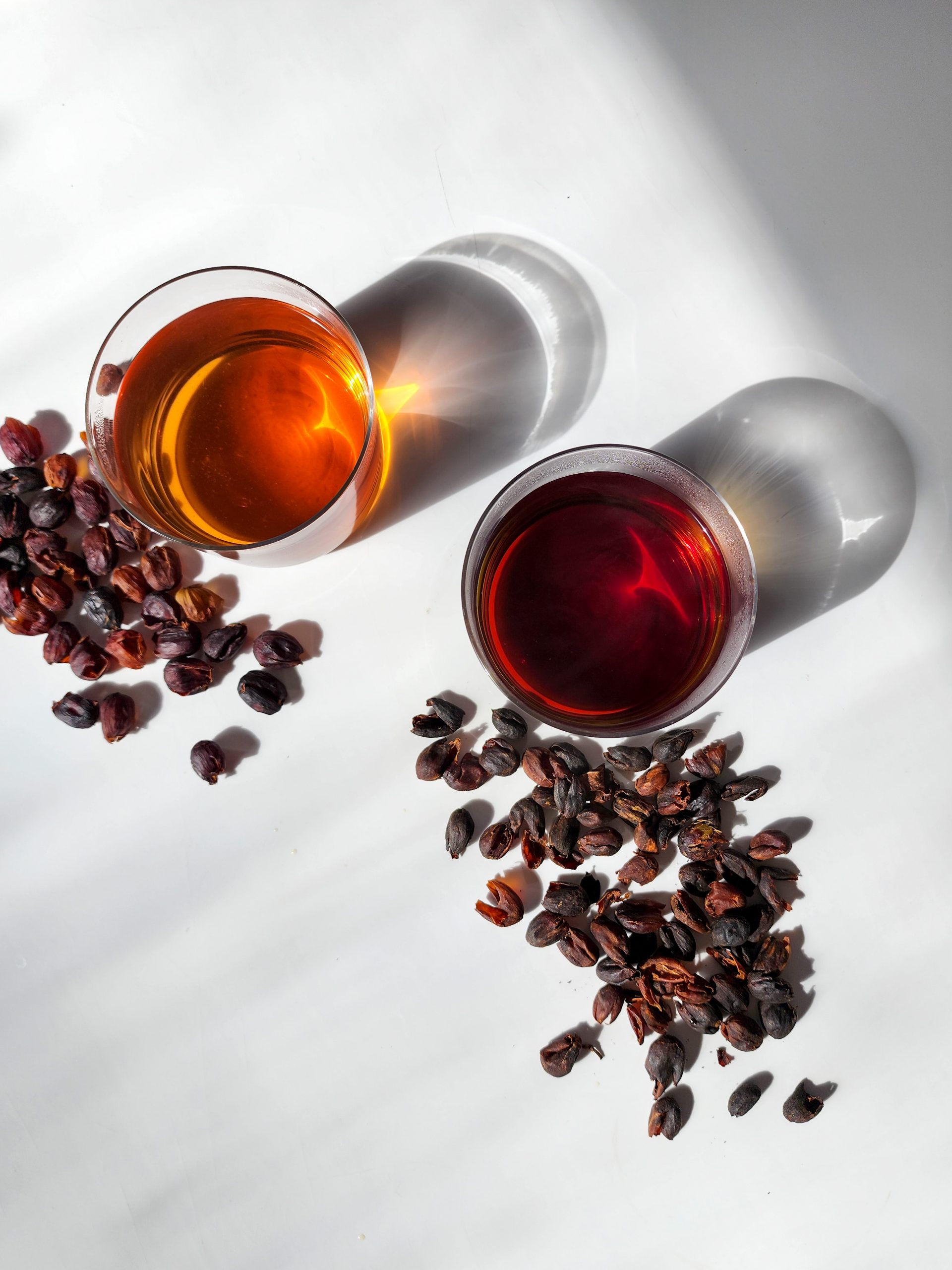
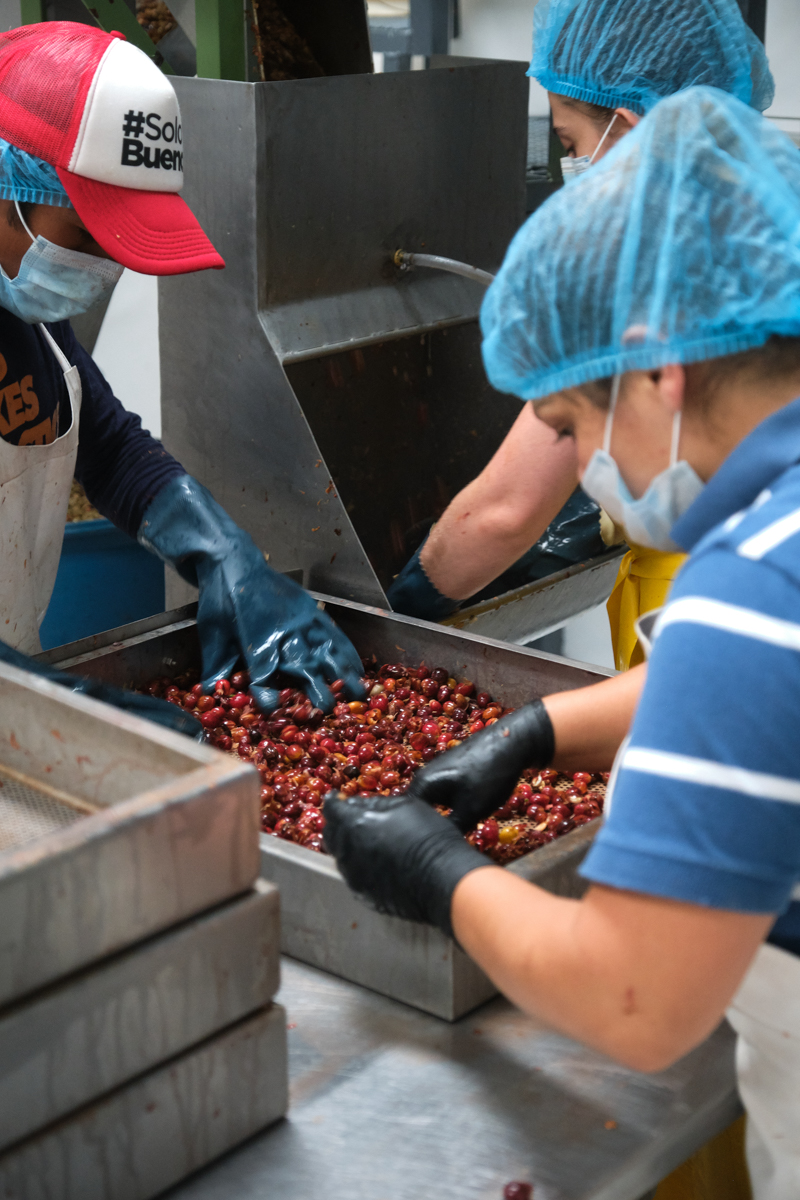
The coffee that contributes to this lot was specifically picked to become cascara. After the coffee was harvested and depulped, the cherry skins were washed, pasteurized, and dehydrated in a sterile facility. The intentionally in the cascara’s production results in a pristinely clean cup that reminds us of a crisp dry cider. You can see the impact of the processing in the look of the cup itself – it’s golden and transparent. This cascara is excellent on it’s own, or as a flavored iced tea.
Flavor Notes
- Aroma: Apple cider, slightly floral, wood
- Flavor: Tart citric acidity with flavors of apple juice, slight florals, and a lingering oolong tea and woody aftertaste.
- Body: Silky, round, and medium-weight.

Brazil Espirito Santo Fazenda Camocim Biodynamic Coffee Cascara Tea 18780
Brazil’s coffees are known for their heavy texture, deep sweetness, and nutty bitterness. This cascara emulates those traits when compared to the Costa Rica cascara. This Brazil cascara brews dark red, with a heavier red-fruit sweetness and an earthy finish. This offering would excel as a concentrate or syrup, bringing a strong cascara flavor to any drink of your invention. As a tea, the drinking experience changes drastically from hot to cool. The tea is heavy and sweet when hot transforming into bright and mouthwatering as it approaches room temperature.
Flavor Notes
- Aroma: Wood and plum
- Flavor: Tart apple acidity with flavors of raisin, dark cherry and caramel followed by an earthy, drying aftertaste like black tea.
- Body: Lightweight and tannic like black tea.


Coffee Cascara brings ecologically and economically-conscious concepts to your menu while presenting something that might be brand new to your customers. Again, there is no standardized way to use Cascara. Enjoy it as a tea or use it as an ingredient! We think you’ll be surprised by its complexity, versatility, and potential for education among staff and consumers.
Earlier Posts

Huehue, Don’t Tell Me…
Perhaps it’s ironic to say that there are sleeper coffees, but in this season of flashy fruity cups, limited-release microlots, and big-name arrivals, it’s easy to overlook the quieter fresh-crop coffees that can be versatile and delicious while also being accessible—both in terms of their cup quality and characteristics, as well as their price.

Cafe Imports takes Manhattan (and Queens), celebrating Meister’s first book
We are headed to New York City at the end of July to celebrate something the Café Imports team holds very near and dear—the publication of Meister’s first book: New York City Coffee: A Caffeinated History! It’s being released by The History Press/Arcadia...
Legendary Coffee Tour: The Alps!
The Cafe Imports Legendary Coffee Tour is coming to THE ALPS! Following the odyssey that was our Legendary Coffee Tour in the U.S. and the United Kingdom, Cafe Imports Europe is taking our travelling cupping event talents to…THE ALPS. We are pleased to...
E.A. Decaffeination Process
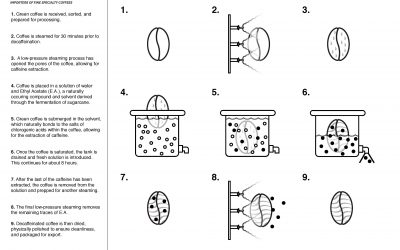
Sugarcane Ethyl Acetate (E.A.) Decaffeination is a natural process that not only maintains astonishing integrity of green-coffee flavor, but also allows us to offer decaffeinated coffee that follows an integrated vertical supply chain, as the growing, processing, and even the full decaffeination process all happens at the source in Colombia.

Legendary Coffee Tour: United Kingdom
On the heels of our first ever Legendary Coffee Tour in the U.S., our traveling Cupping event/coffee festivity is jumping across the pond!
Café Imports Europe is packing up their traveling cupping kit and headed to the United Kingdom at the end of this month! And if that’s not exciting enough, we are hitting the Alps (Munich, Zurich, and Vienna) on 31 July–3 August.

17 June, Berlin: Cupping event with Luiz Paulo of Carmo Coffees
Join us at our European office on 17 June at 3pm for a chance to meet and cup with Luiz Paulo, one of the founders of Carmo Coffees—our longtime exporting partner in Carmo De Minas, Brazil. For more information leading up to the cupping and to R.S.V.P, visit our...

Origin Report: Kenya 2017
Fresh-crop Kenya season is one of the most thrilling times of year for us, and not only because the coffees are always delicious and dynamic, but also because their arrival is the culmination of complex work behind-the-scenes—work as complex as the coffees themselves.

Stump the Roaster: Berlin, 4th May
Join our European Cafe Imports team for a night of Stumping the Roaster! A focused conversation about roasting coffee, with an extraordinary panel of coffee professionals. The evenings events will talk place Thursday, May the 4th at 7pm at our European office...

The Legendary Coffee Tour, Spring 2017
We are pleased to be announcing our Spring 2017 “Legendary Coffee Tour“, hitting a cupping table near you this May! The Legendary Coffee Tour is a travelling coffee education event and celebration presented by our notorious team of Café Imports Sales Reps...

Origin Report: Costa Rica 2017
Ever since we bought our first container of Costa Rican microlots in 2004, we have been nurturing and growing our relationships with producers there, only to see the projects, partnerships, and the coffees themselves blossom in ways we honestly just could not have...
Progress Report: Environment 2017–Remaining Carbon Neutral with Trees, Water, & People
“From 2005-2016, every bean of coffee that reached the Café Imports warehouse doors was carbon neutral/carbon offset by planting trees. This new effort (with Trees, Water & People) in 2017, a charitable effort by the ownership of Café Imports, guarantees...

“Perfecting the Enemy of the Good” — A New Cupping Score Card by Ian Fretheim
Cafe Imports Director of Sensory Analysis Ian Fretheim has been working on a new Cupping Score Card for some time now. After careful development and refinement, based on years of on-again/off-again brainstorming and months of application, Ian has arrived upon a new...