
Ratnagiri Estate: A New Era of Coffee from India
FROM THE ABUNDANCE OF THE WESTERN GHATS
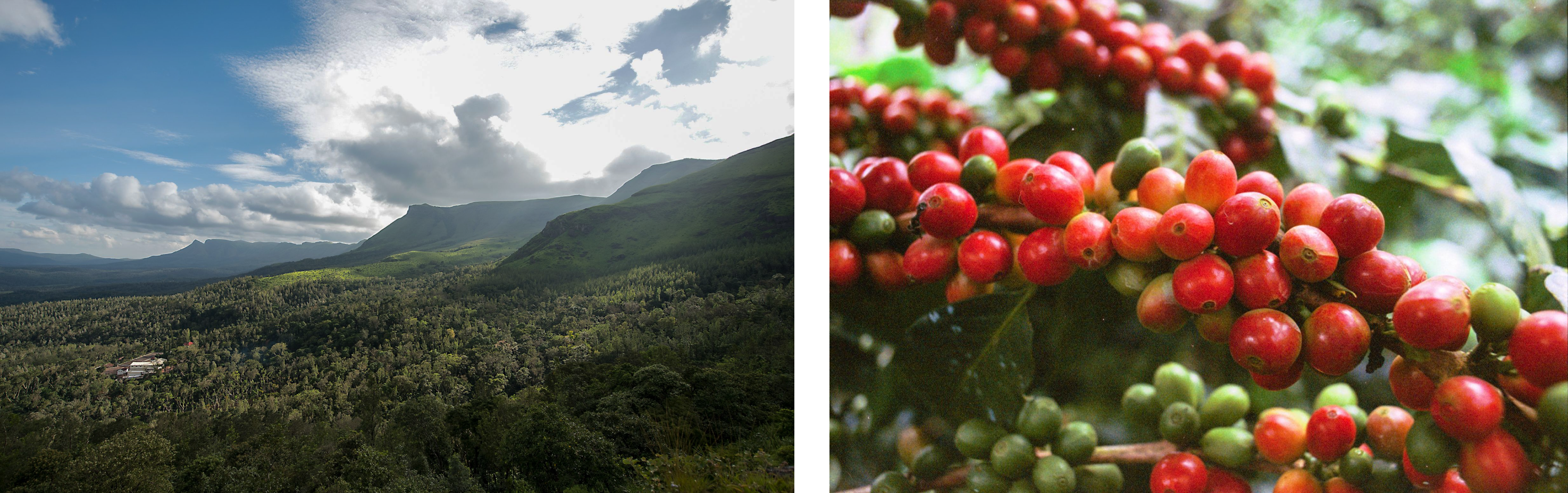
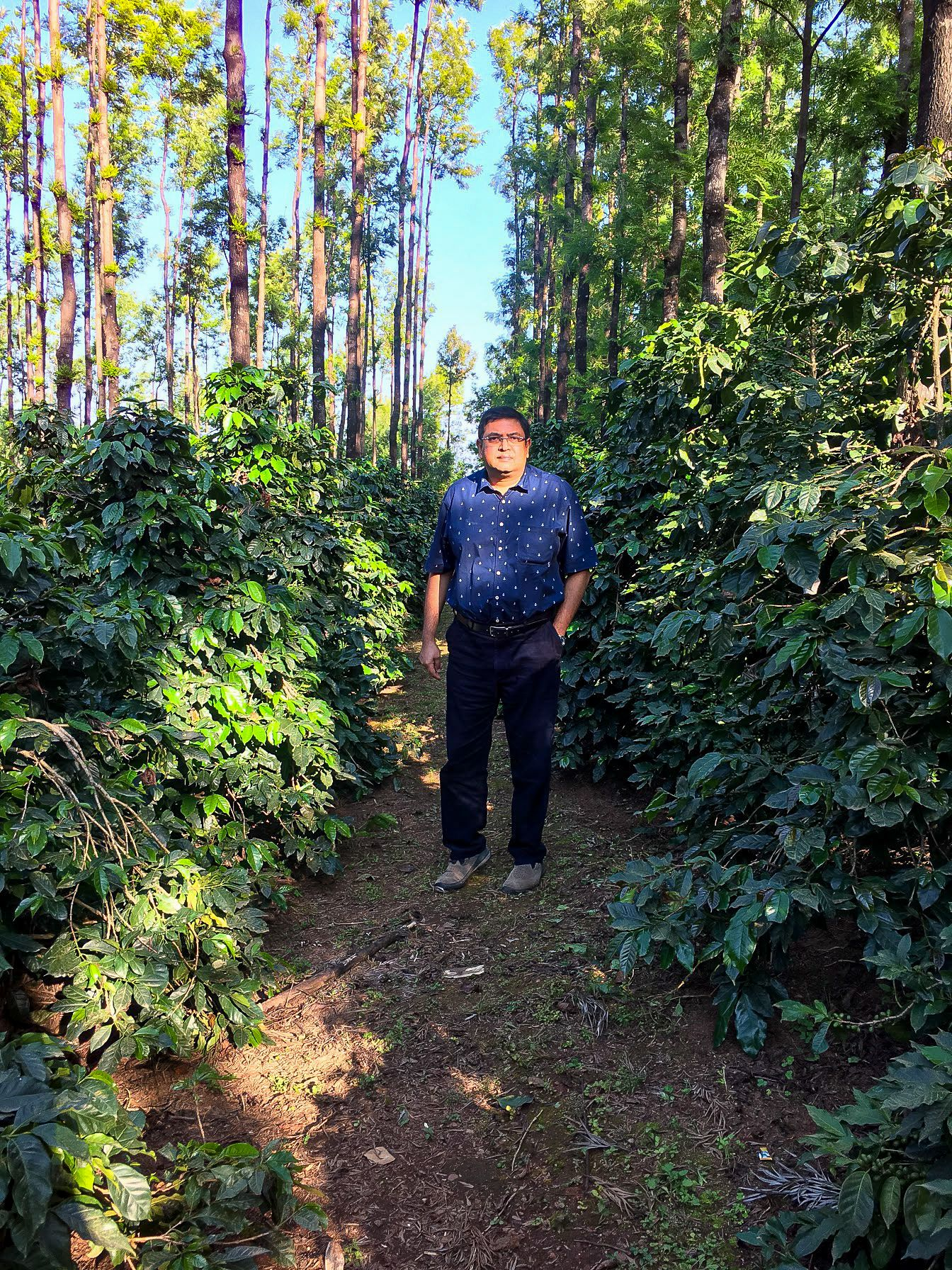
The Western Ghats, or Sahyadri mountain range, runs parallel to the coast along the western edge of India, reaching south into the Karnataka State. Westerly monsoon winds carry dense rain clouds that break on the intercepting mountain range, sustaining the rainforest’s flora, fauna, and wildlife. Ratnagiri Estate is situated in the southwestern Ghats’ foothills, where the mountain meets the Deccan Plateau near Bababudangiri, the birthplace of India’s coffee production. This abundant mountainside is canopied by silver oak trees, shading the coffee that’s been grown below for generations. The Patre family founded Ratnagiri Estate in 1927, and Ashok Patre assumed ownership in 1989. Since then, Ashok has revolutionized coffee production on his farm and in India.
India may not be well-known for its specialty coffee production, but over the past five years, we’ve been consciously sampling more coffee from here in search of a source to introduce India microlots to our offerings. We met Ashok Patre a few times in recent years and finally sampled his coffees in early 2023. Using our newly developed cupping form, The Coffee Rose, the quality of the offerings was evident. As Ashok told us, “Slowly, we were successful because the coffee spoke for itself… It was a long journey, but well worth it because we were able to showcase that even India can produce some really good specialty coffees.”
ASHOK PATRE: A PRODUCER’S JOURNEY INTO SPECIALTY
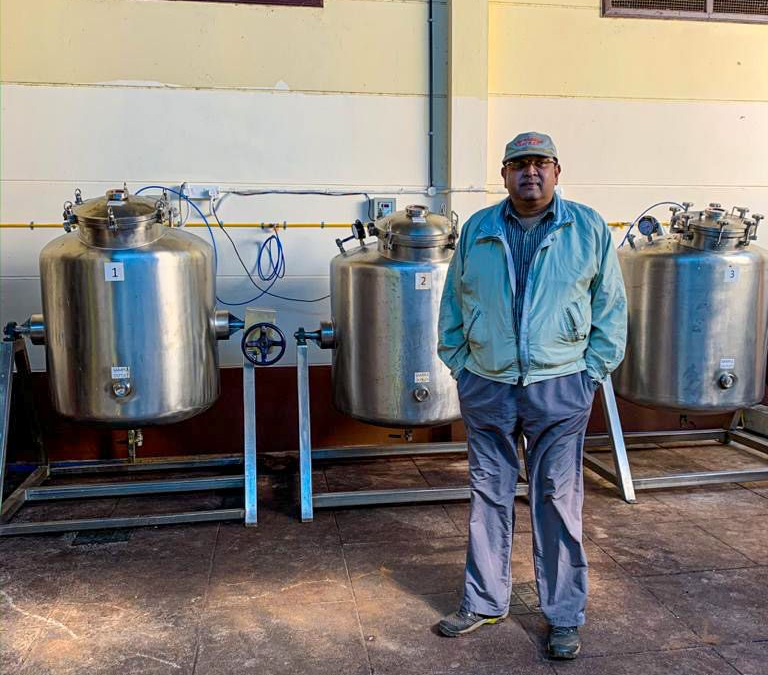
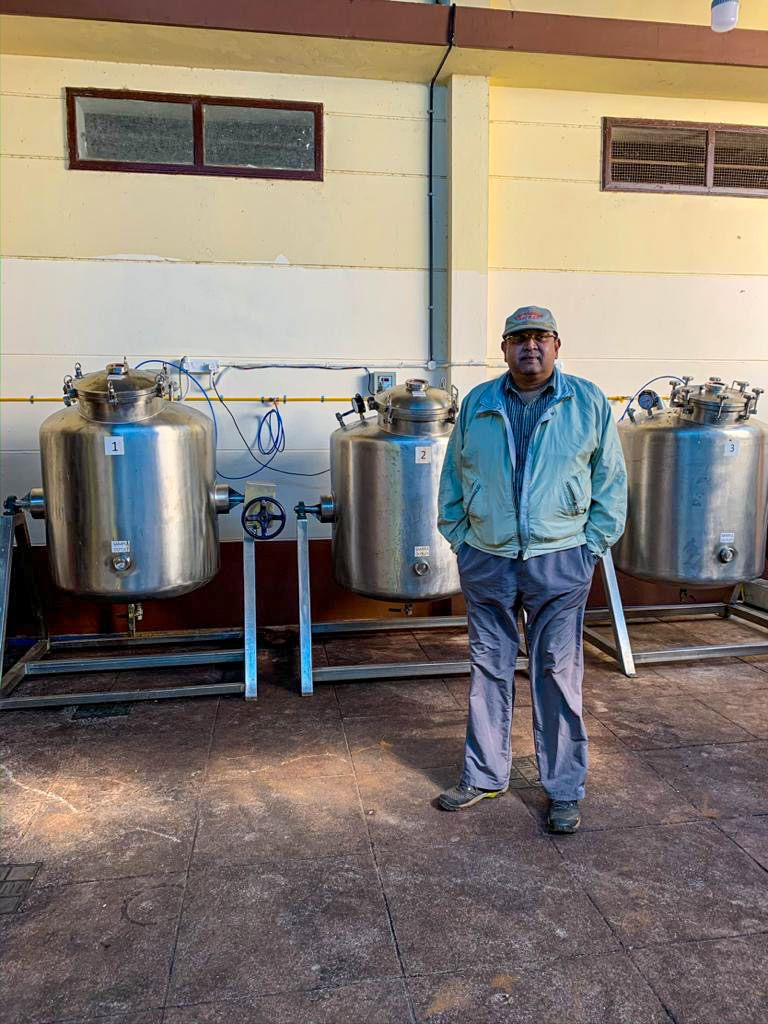
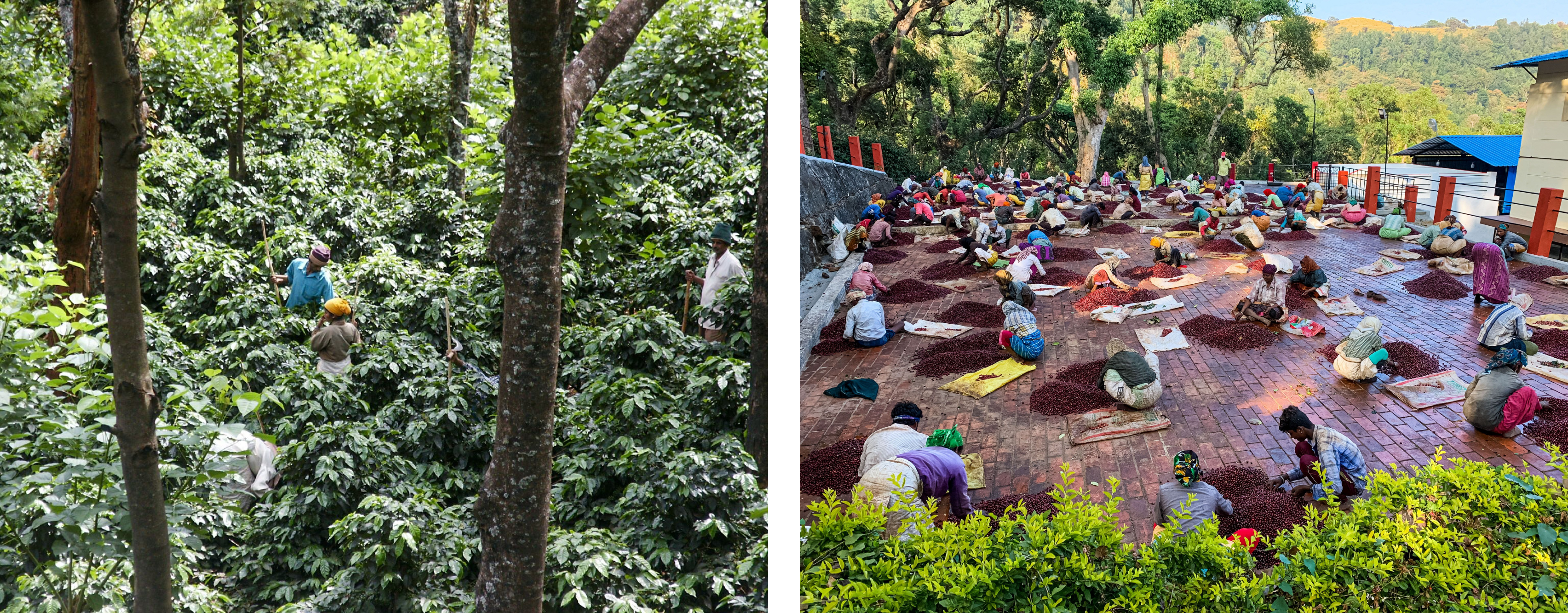
We met Mr. Patre at SCA Expo in Portland most recently and learned more about him, his farm, and his production ethos. He exudes humility and deep coffee wisdom as he explains the farm’s transformation since his ownership began. Converting from a traditional coffee farm to a specialty-focused operation is a risk, especially within a country where nearly 75% of the coffee produced is Robusta. After taking over the farm in 1989, Ashok only practiced washed processing like his family before him. In 2010, though, he noticed the single-origin trend in cafes and the industry’s push for higher-quality offerings. In 2016, Ashok produced his first honey-processed coffees and slowly started adapting production toward specialty to meet this demand. The risk in this change was finding customers, but the reward was surviving the rising cost of inputs and labor and the pressure of climate change. Year by year, Ashok reevaluated all aspects of production. He began with cherries by implementing more selective picking over five to six rounds, followed by intensive sorting before processing. “We feel that is most important in Specialty to start with.” He then invested in infrastructure by constructing a mill, drying houses, and a washing station outfitted with fermenters.
RATNAGIRI ESTATE TODAY
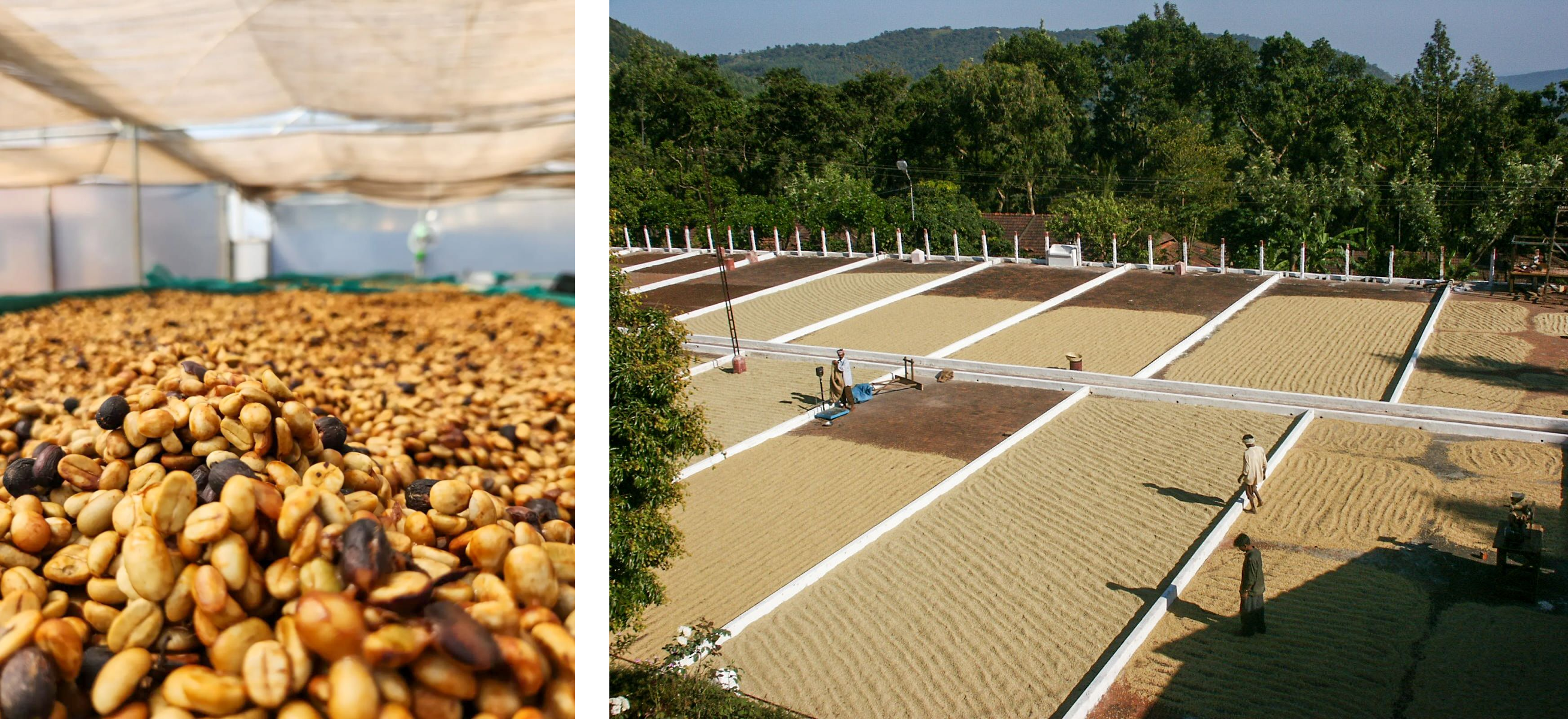
Every aspect of production and process is controlled at Ratnagiri Estate, and 60% of the 117-hectare farm’s volume is Specialty grade. Ashok is focused on eco-friendly farming – “The only thing we use is fertilizers, and in case we have a pest attack, it is always biological control… I have seen a lot of farms all over the world [who] by indiscriminate use of pesticides and herbicides…ruin their farms.” Varieties grown at Ratnagiri include Catuai, Catimore, Cauvery, SL-9, and Hemavathi intercropped with fine pepper. Fifteen unique processes have been applied to the offerings available this harvest. There are multiple modulations of washed, carbonic maceration naturals, anaerobic naturals, yeast-fermented naturals, aerobic fermented honeys, and their signature carbonic macerated washed. Learn more about these processes on our Education page.
The carbonic macerated washed coffees are harvested at 23-27⁰ Brix, fermented anaerobically in-cherry for 48 hours, then depulped. The depulped seeds are placed in large stainless-steel fermenters which are then purged with carbon dioxide gas, and the coffee ferments for 90-120 hours. After removing the seeds, they are washed, soaked for 24 hours, and dried for 25-27 days. This incredible labor-and-time-intensive process produces coffee wholly unlike traditional washed India arabica. This year, we’ve found medium-intense tart acidity, clean sweetness, jammy berry notes, and cocoa or nut structure in the cup.
OFFERINGS THAT ADVANCE THE INDUSTRY
Ashok’s intention is to showcase India in a new form, and Ratnagiri Estate coffees do. We are grateful that Mr. Patre’s interest in specialty coffee was sparked over 10 years ago and that these offerings have reached our warehouse. As Cafe Imports sources throughout more regions, we find ourselves walking through farms that, in previous years, would not have been considered a specialty source. The forward-thinking producer, though, challenges the industry’s conception of what good coffee is and where it comes from, changing the landscape. Ashok is emblematic of this new era in coffee, and we can’t wait to walk his farm and facilities later this year.
To find out when coffees land, watch more interviews like this, and join our events, follow us on Instagram @cafeimports.
For a unique India offering on your espresso or filter bar, view our Ratnagiri Estate offerings now.
Earlier Posts
Harvest Report: Peru 2020. Coffee finds a way…
If there’s one thing we’ve learned these past few months, it’s that coffee will most definitely find a way.
Along with our producer partners, we’ve learned to adapt to Zoom to meetings rather than zoom from place to place on airplanes, and we’ve found other ways to stay in touch and even cup together (apart). In fact, we’ve been able to find a lot of joy from seeing friendly faces on our screens—especially when they have good news to share.
Harvest Report: Brazil 2020 and Some Good News in This Strange Year (Finally!)
It turns out there has been one good thing that’s happened so far in 2020: Weather so perfect for the most recent harvest in Brazil that we can’t wait to tell you all about the coffee’s we’ll begin receiving shortly.
Harvest Report: Kenya 2020 – Complicated Is Beautiful
When we set out to tell our customers about the most recent Kenyan harvest every year, we realize it’s always a story with many, many chapters: Flavor, of course, is where the action happens, but there’s also lots of history required for the set-up, characters to introduce, and some plot twists along the way. Thankfully, these are just the kinds of stories we love to read, and the ones we love to tell—especially when everything turns out so delicious in The End.
6/2/20 – Status Update: We Are Open
Well, so far we’ve made it through two months of working from home, social distancing, changing protocols, navigating a changing business landscape, and experiencing a real rollercoaster of emotions. Like you, we’ve also been overwhelmed by what feels like a constant barrage of news and information—including updates like this one—from just about everywhere and everyone.
Shipping Delays: Will There or Won’t There?
There have already been many immediate and obvious ways that the COVID-19 situation has affected the specialty-coffee industry, but we’re also keeping our eyes on a developing obstacle that may have further-reaching impact on the season of shipments we’re expecting over the coming weeks: a global container shortage and port backups that have been snowballing since late January.
We’ve reduced the price on lots from Tega & Tula in Ethiopia, and here’s why.
One thing we don’t normally do is offer discounts or have “sales” on green coffee because we believe in trying to set a fair price for all of our partners—from the farmer to the exporter to the roaster—from the moment we contract the coffee. We’re living in unusual times, however, and we’re announcing our first-ever blanket discount on all of our current spot coffees from Tega & Tula Farm in Limu, Ethiopia.
Harvest Report: Ethiopia 2020
When all we can do is daydream about traveling, where else would we want our minds to wander? Let’s check in on the 2020 harvest in the birthplace of Arabica coffee: Beautiful Ethiopia.
Harvest Report: Colombia 2020, from Farmers to Friends
We say it every year, and every year we mean every word: Colombia is our second home, and it’s often an incubator for the ideas that become cornerstones of our business, our buying philosophy, and the scaffolding for our strongest relationships. This connection to the country is made possible through repeated visits—our green-coffee buyers visit more than once a quarter—as well as constant contact via e-mail, Skype, and WhatsApp in between. More often than not, we could give you an up-to-the moment idea of the weather in Bogotá as we could tell you whether the sun’s shining in Minneapolis, Berlin, or Melbourne where our sales offices are.
Harvest Report: Costa Rica 2020 and the Choices Producers Make
When we look at a beautiful harvest, or when we taste a brilliant cup, we tend to want to romanticize it: We imagine rolling hills and bright blue skies, the smell of fresh coffee blossoms, the sway of the shade trees. What we don’t think of are the countless steps that the producer went through to create that dreamy flavor experience, and the dozens of decisions that have to be made before, during, and at the end of the season in order to sustain or even improve the final product.
A Coffee-Producing Legend Goes Truly Seed-To-Cup with a New Café
We always say that Arnulfo Leguizamo is the ultimate cafetero role model: He’s not only a producer of some of the finest specialty coffees we’ve tasted from Huila, Colombia, but he’s also a community leader, innovator, and problem-solver, always looking for a way to improve or expand the ways he shares his coffee with others.
Growing a Movement with FUDAM – Nariño, Colombia
What does it take to grow a movement? For the association FUDAM (Fundación Agraria y Ambiental Para el Desarrollo Sostentible) in Nariño, Colombia, it takes a lot of passion, community, commitment, and forward thinking. Of course, great coffee helps, too—and FUDAM has got great coffee in abundance.
A Year-End Reflection on Our Harvest Reports: What Do You Want to Read in 2020?
We’re not only coffee nerds, but we’re also a company comprised of passionate world travelers and people who love people: Your friends at Cafe Imports tend to be curious, eager to learn, and dedicated to sharing what we know and what we do with other coffee people around the world—from farmers to roasters to everyday people who just happen to love a great shot of espresso. Our Harvest Reports are one way that we try to give our customers (and your customers) a behind-the-scenes look at the year’s coffee sources, and as this year closes we’d like to reflect on the reports and learn how we can make them better.