

What happens when an experimental farm and a micromill work hand in hand for five years?
A week and a half ago, we traveled to mountainous Vancouver, Canada, to participate in the World AeroPress Championship finals. We’ve been the coffee sponsor and close supporter of this event for many years. Most recently, this has evolved into sourcing an offering alongside the WAC team to supply the competitors with a unique and versatile coffee to compete with. We sat on the judge’s panel this year, cupping through nearly fifty brews. The spectrum of flavor profiles, ranging from delicate to intense and bright to deep, was astonishing. It speaks to the versatility of coffee as an ingredient and the tools and talents of the champions – all reliant on the professionals who cultivated, harvested, and processed this coffee.
This year’s coffee was Cauca, Colombia’s Finca Juan Martin Red Striped Bourbon, one processed washed and one processed naturally at Manos Juntas micromill.
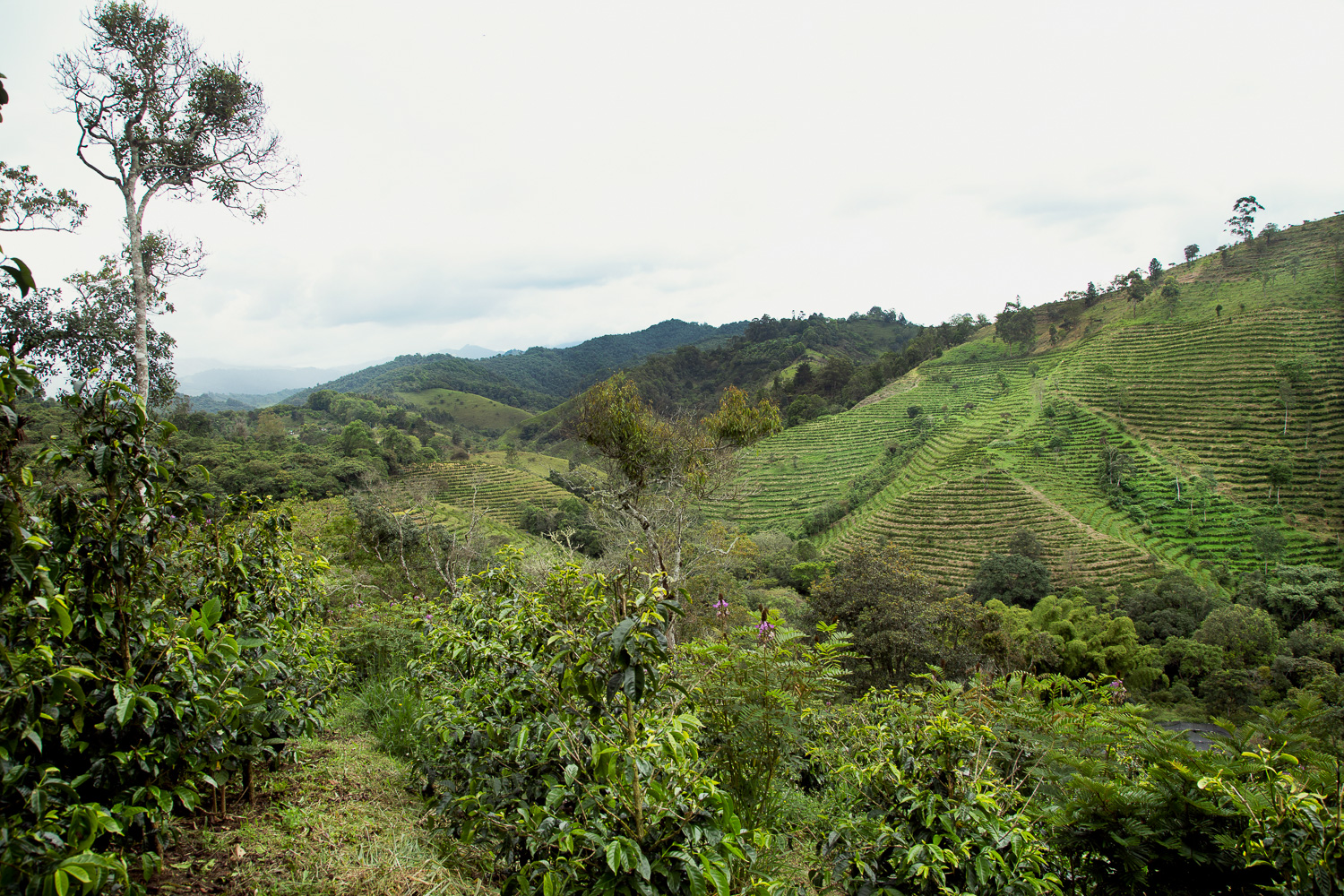
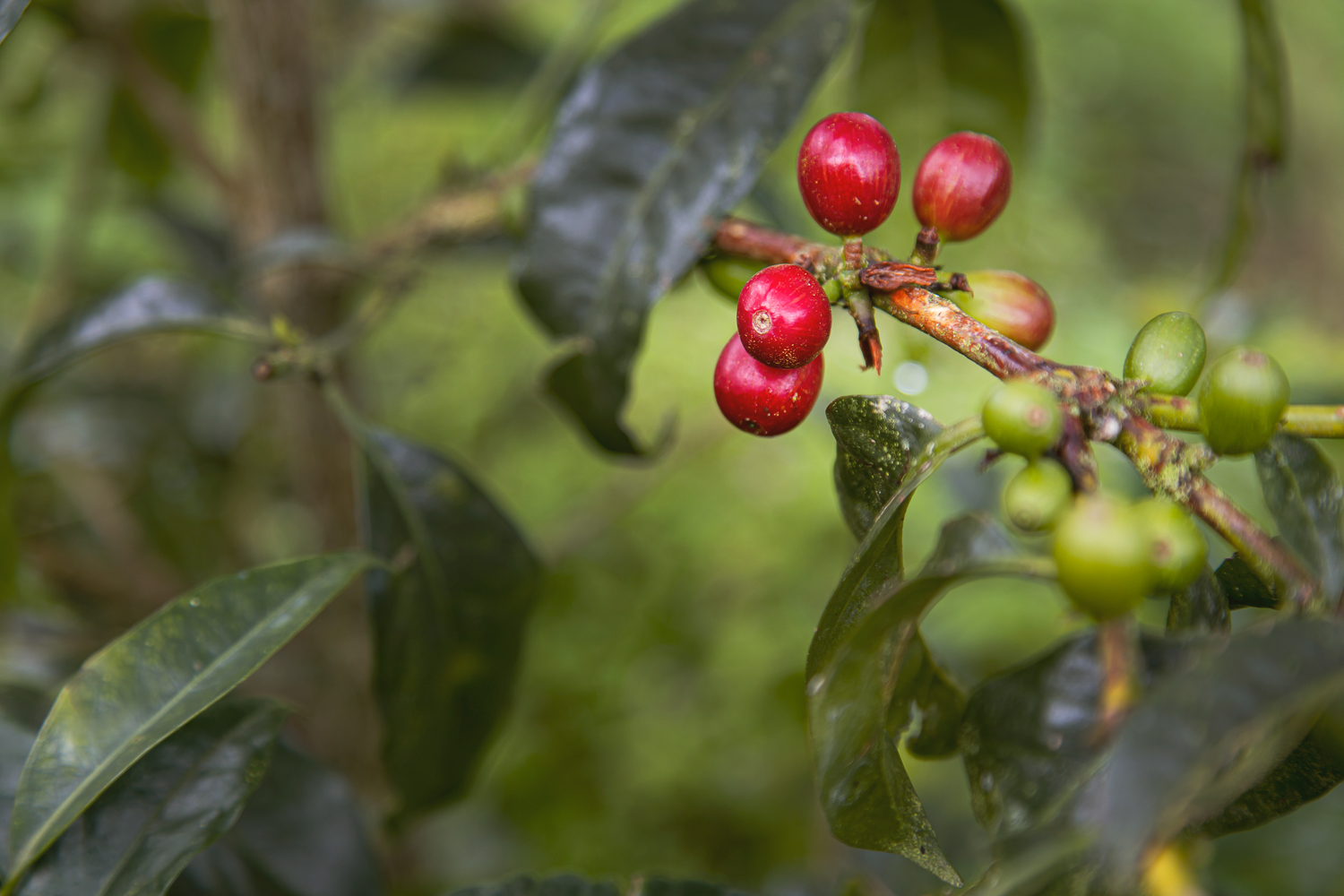
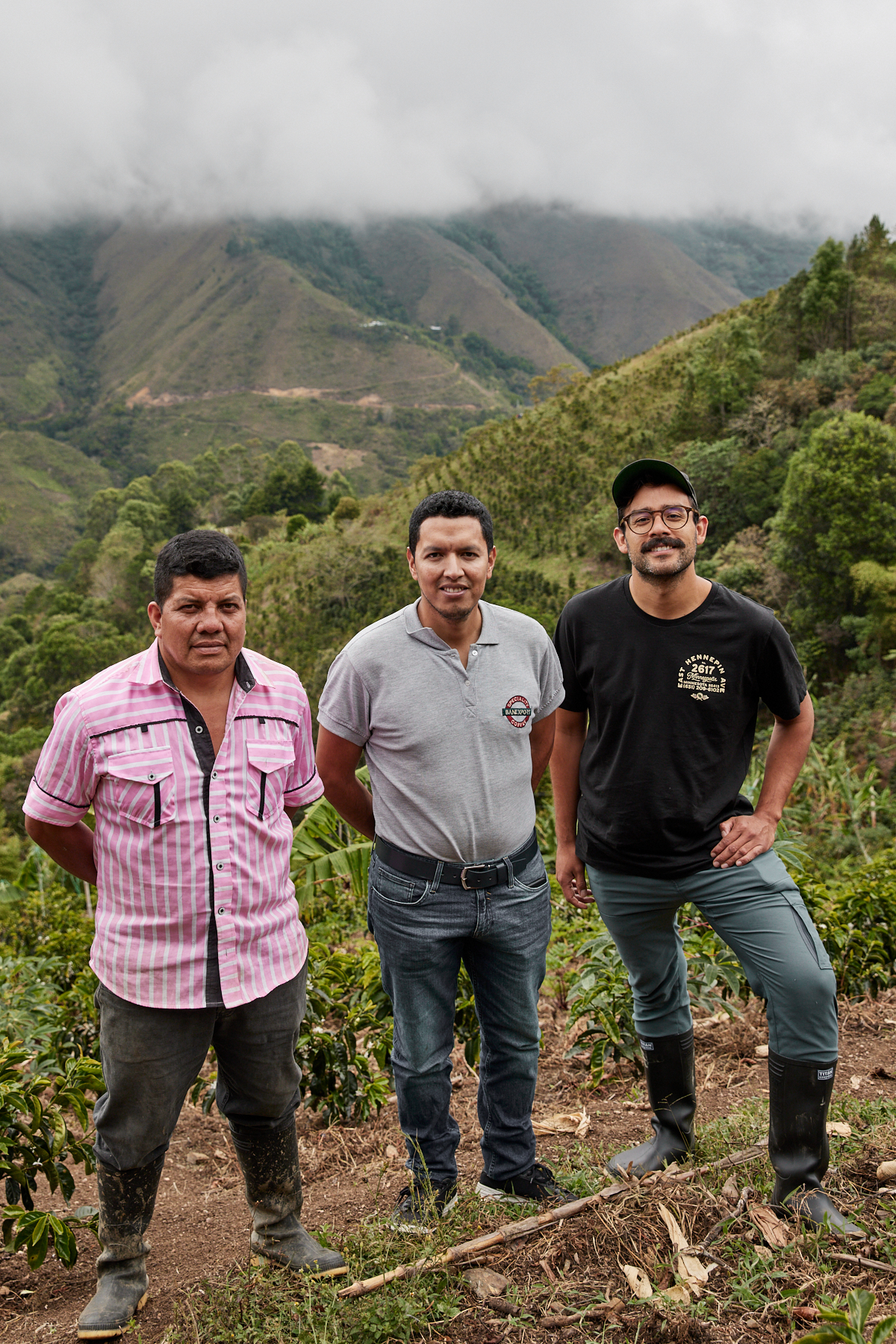
Finca Juan Martin and Manos Juntas are two different projects, both striving to make coffee production more profitable for producers and consistently delicious for consumers, all under the Banexport umbrella. Banexport is our longstanding partner and friend, sourcing and exporting many of our Cauca, Huila, and Nariño offerings. Their commitment to quality, sustainability, and economic equality for producers is exemplified in their projects, particularly Finca Juan Martin and Manos Juntas.
FINCA JUAN MARTIN
Modeling the future of specialty coffee in Colombia
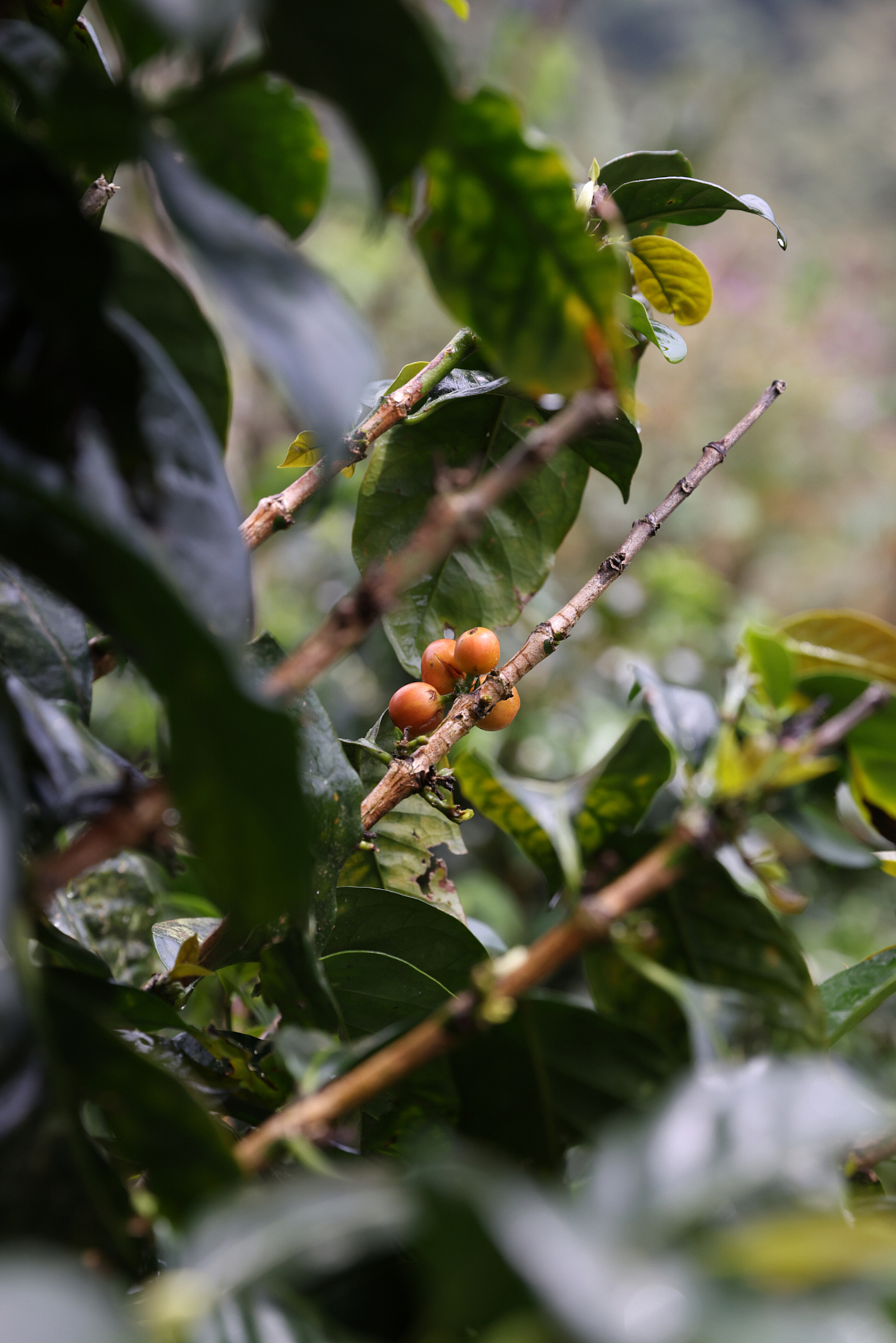
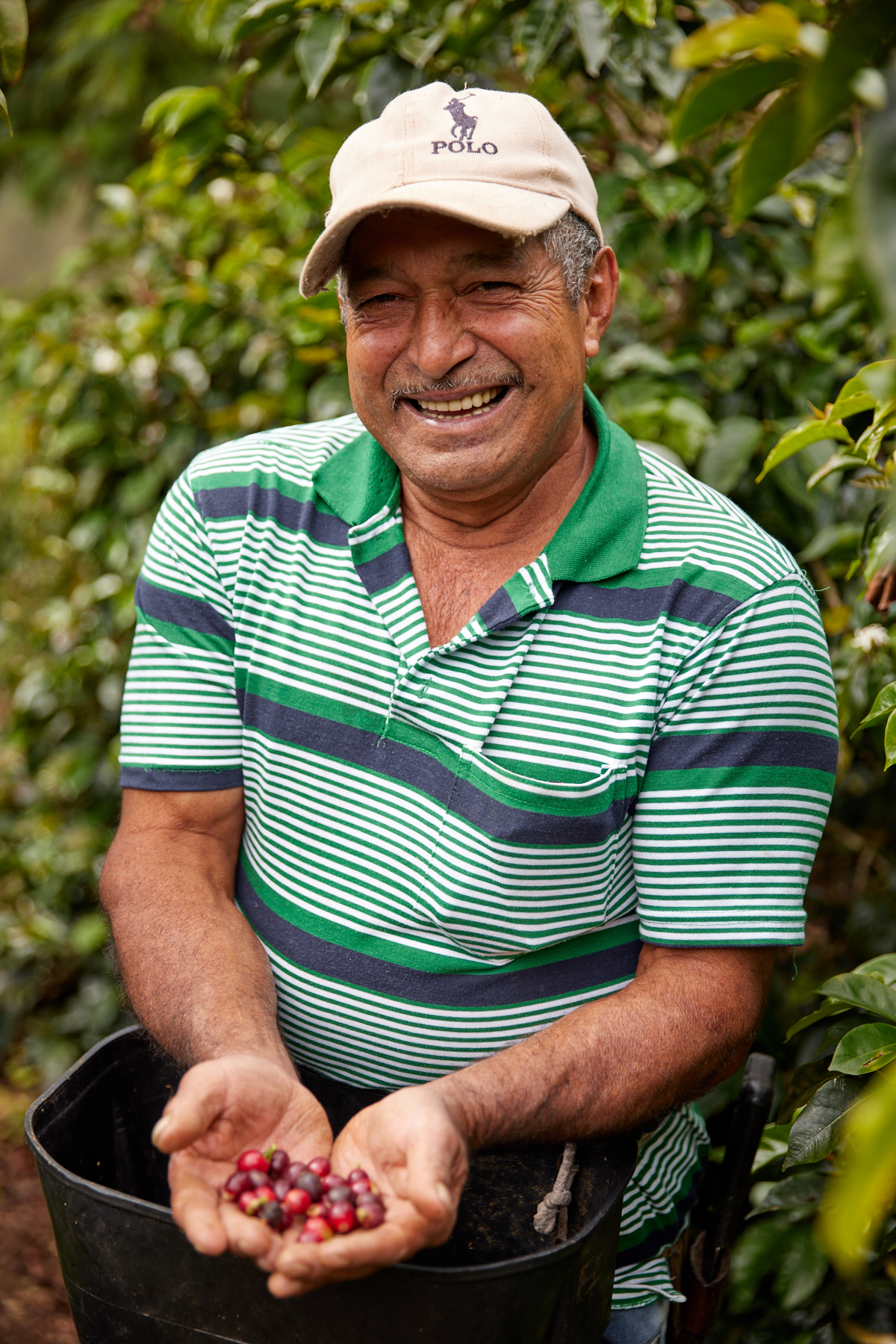
Best described as a model farm, Finca Juan Martin aims to develop quality-focused cultivation techniques with eleven varieties and counting, ranging from traditional (Colombia f6, Castillo, Caturra), to recently discovered (Red Striped Bourbon), to famous (Gesha, Sidra, Pink Bourbon). This knowledge is offered to producers in Cauca freely. Employees are paid competitively with full benefits. These practices are guided by their mission of making coffee a viable career path for generations to come throughout Colombia. When you purchase coffee from Finca Juan Martin, you support a competition-level farm that passes on its techniques to producers throughout Cauca.
We recently received fresh shipments from this project, available now in Minneapolis, including Red Striped Bourbon, Pink Bourbon, Sidra, Gesha, Arara, and Harrar.
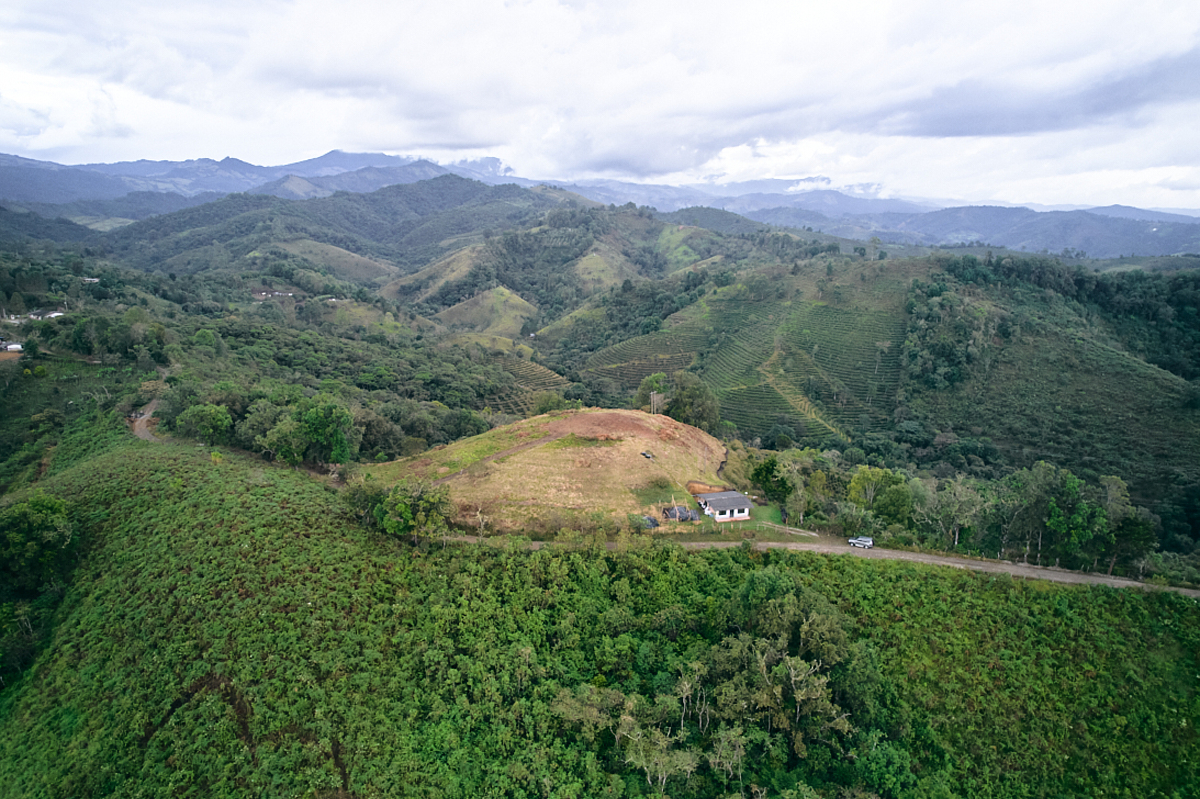
After the coffee is hand-harvested and sorted, the lots travel 25 miles from Sotara to Banexport’s micromill, Manos Juntas, in Popayan.
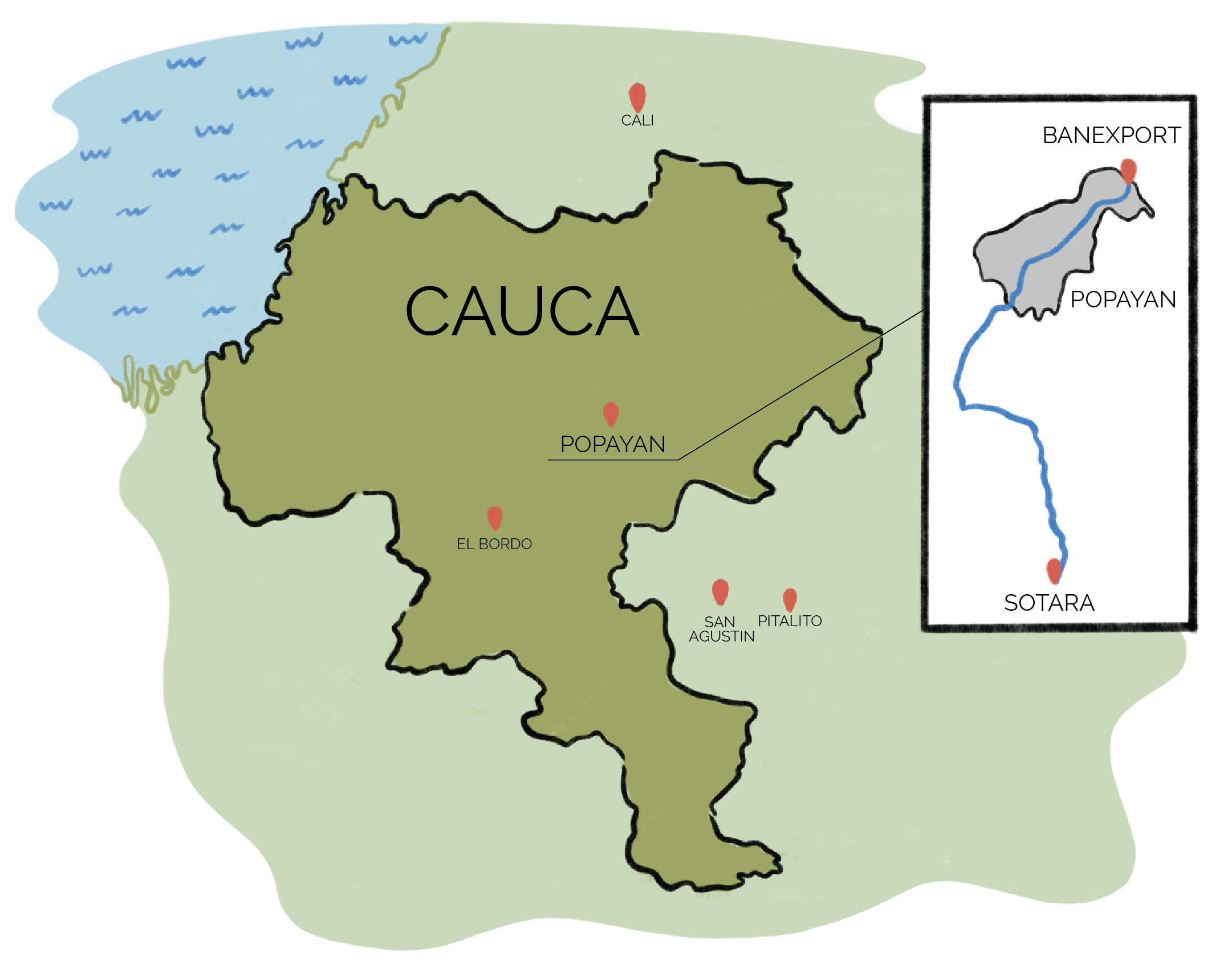
MANOS JUNTAS MICROMILL
Responsible, sustainable, and scientifically informed coffee processing
Manos Juntas is a micromill – a private, small-scale wet and dry mill. All of Finca Juan Martin’s coffee is processed at Manos Juntas. More importantly, though, Manos Juntas purchases cherry from over 60 producers throughout Cauca and Huila, paying them more expeditiously while taking on the risk of finishing and selling the coffee. Their process is forward-thinking, seeking solutions for many of coffee’s production problems.
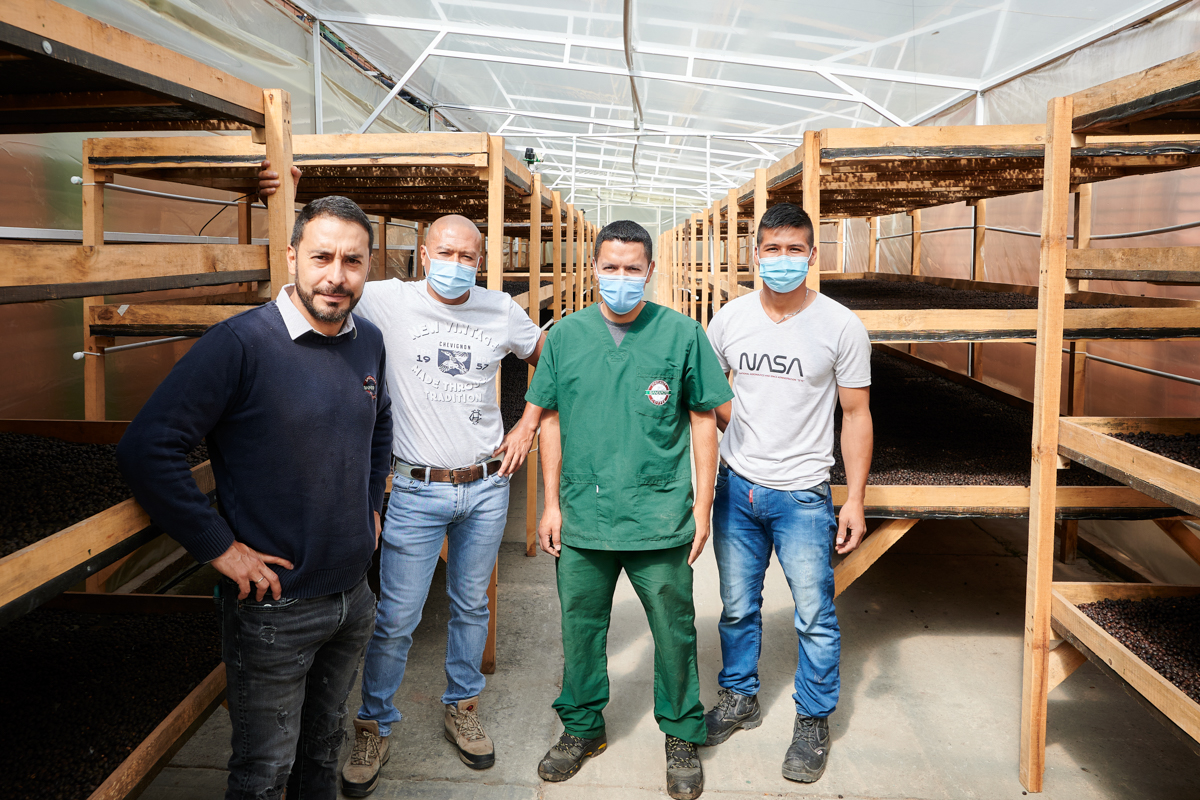
Here’s a look at a coffee’s journey through the mill, and what sets Manos Juntas apart.
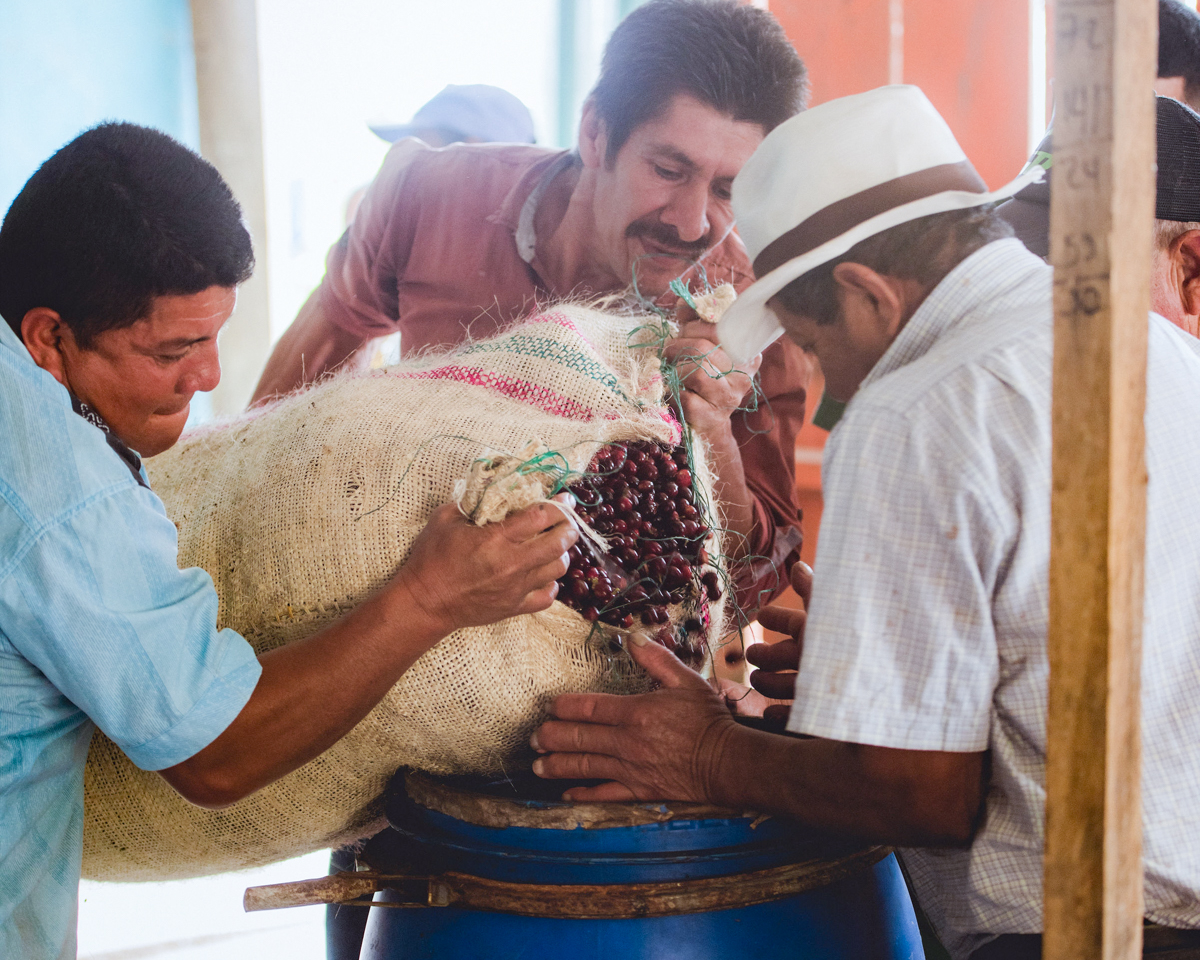
Purchase Cherries from Producers →
- Producers are paid 2-3 months sooner than if they were to sell their own coffee in parchment.
- The producers are paid at least 25% more than Colombia’s standard differentiated rate.
- Manos Juntas assumes all risks associated with processing, drying, and exporting coffee.
Pre-Processing →
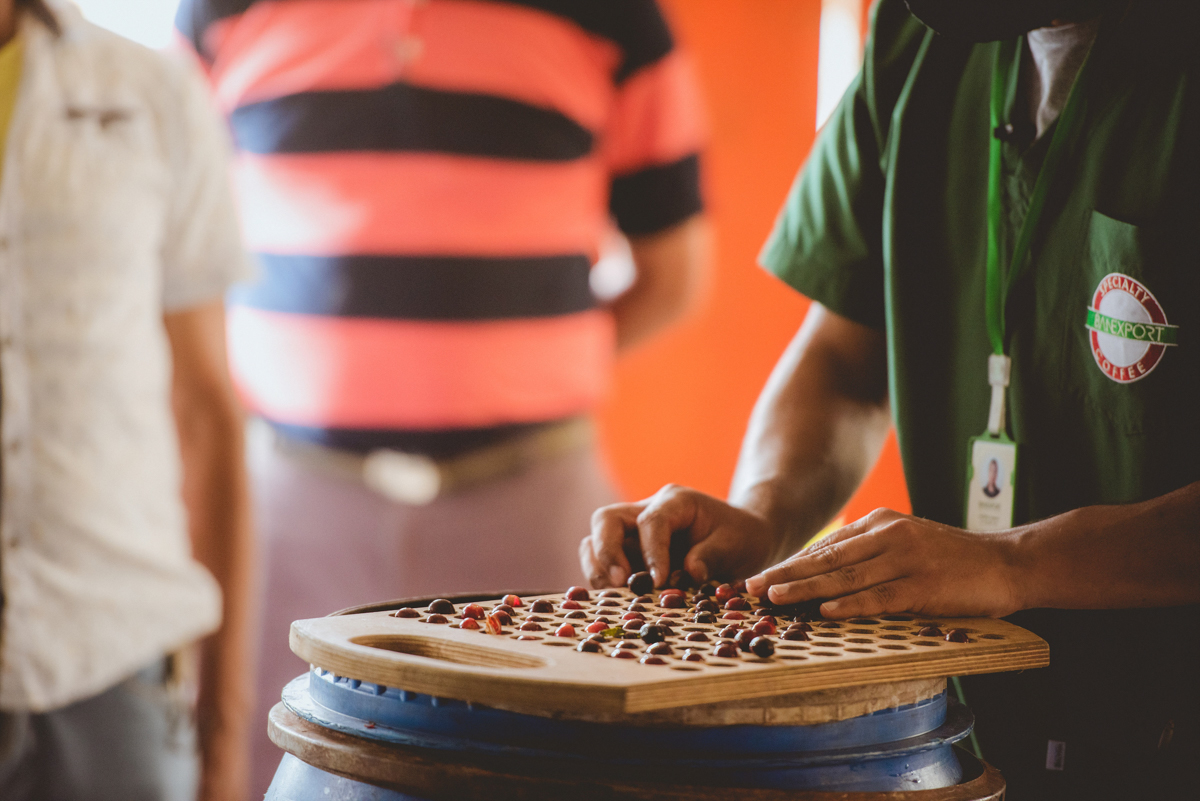
- Cherries are sorted by size and density into lots for homogenization and consistency in fermentation and drying rate.
- The cherries are then cleaned with UV light and an ozone solution to eliminate any foreign material and microorganisms that would impact the fermentation
Processing →
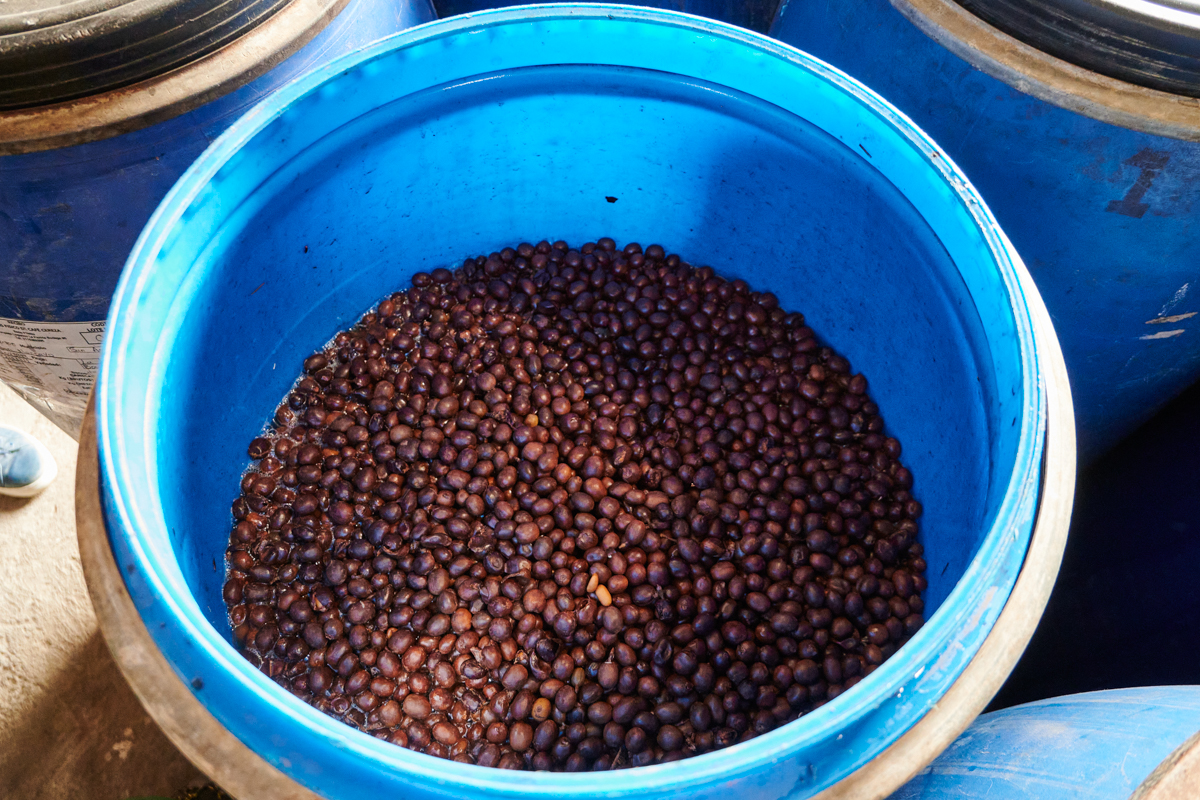
- Manos Juntas produces washed, honey, and natural-process coffees, as well as anaerobic variations of all three.
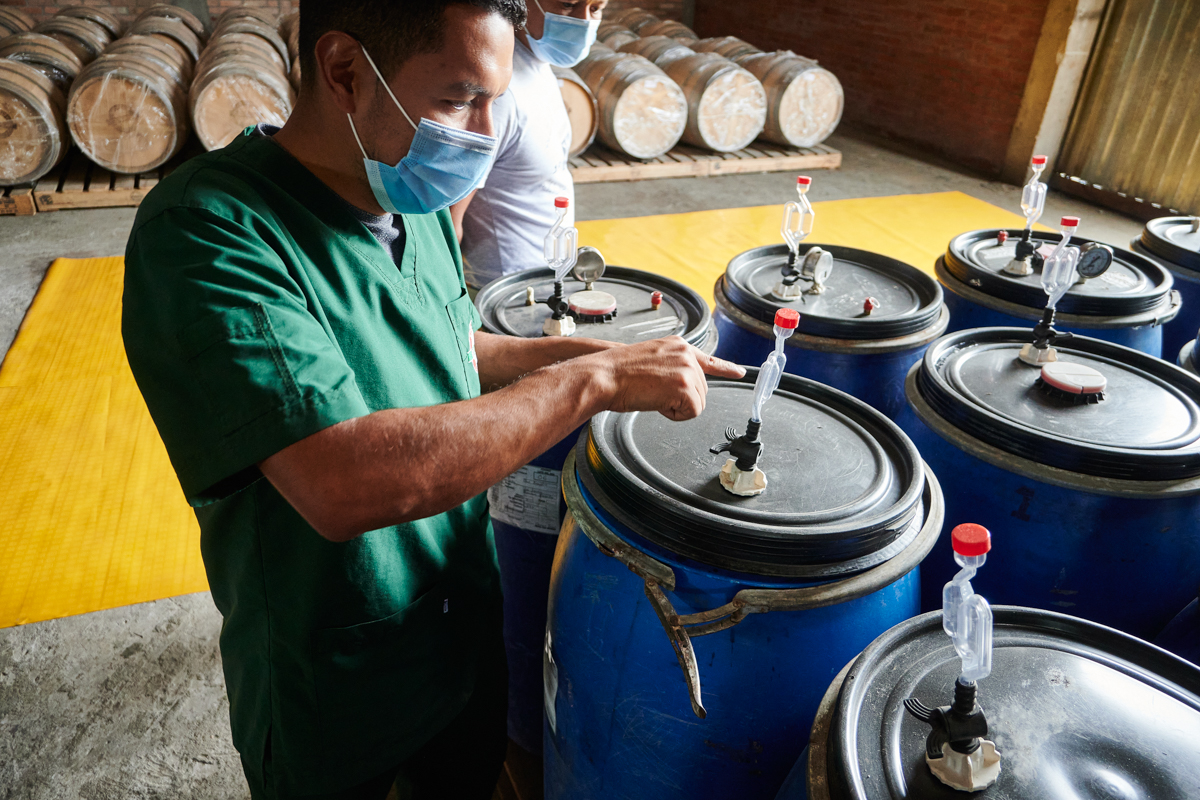
- Fermentation is controlled by isolating the lots and applying microorganisms from the same farm they develop in-house.
- Operations are fully powered by solar panels.
Drying and Post-Process
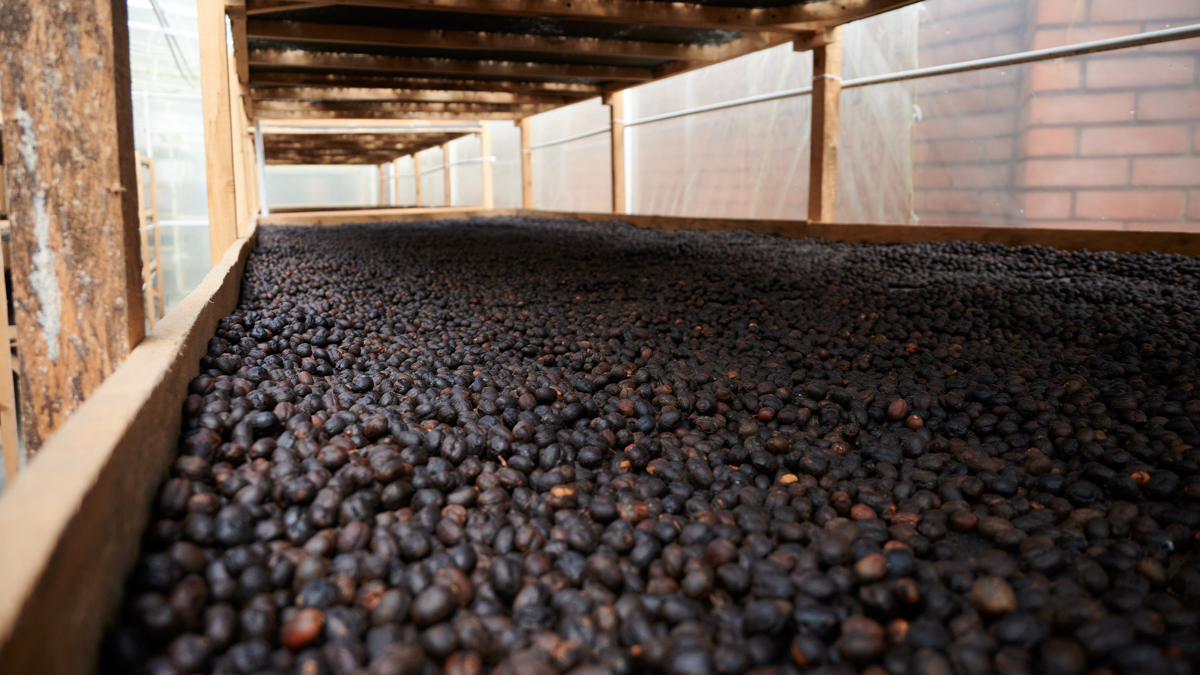
- Coffees are dried in a solar dryer. The humidity is controlled by compressed air, bringing the relative humidity down from 70% to 30%.
- All wastewater used in processing is filtered and treated before being pumped back into the city water system.
- The coffee by-product is being used in multiple ways: fertilizer, cascara, and other products that are in testing with the goal of generating more profits to be passed back to the producer.
Purchasing Manos Juntas offerings allows this project to continue to grow in its capacity to innovate and serve more producers in an effort to raise the floor of coffee prices throughout Colombia. These coffees are beautifully consistent and improve year after year.
This is a long one, folks, but we are passionate about these projects.
It’s why we continually partner with people like Banexport. Prioritizing honesty, responsibility for the environment, and creating a sustainable path for producers is more important than ever. These two projects provide us with incredible coffees, yes. They also fight for the future of coffee in the face of climate change and economic instability so that the livelihood of all in the production chain is recognized as valuable – so that we might enjoy a morning cup that isn’t at the expense of others but creates more opportunity and potential for others.
Earlier Posts
Origin Report: Peru 2017
We’ve been getting to know—and falling more and more in love with—Peru for years, and the rest of the world is starting to discover the quality and character in these wonderful coffees.
Origin Brief: Burundi 2017
It’s never easy to source coffee, but some coffees are admittedly a little harder than others.
Midwest to Middle East: Cafe Imports in the GCC
Cafe Imports spent a week bringing coffee education, cupping, and community to the Gulf Cooperation Council, visiting Saudi Arabia and United Arab Emirates to celebrate our new partnership with Kafa Coffee, based out of Khobar, Saudi Arabia.

Minneroasta 2017: You're invited!
You’re invited to the grand opening of the Mill City Roasters Campus for the First Annual “Minneroasta!”
Minneroasta is a two-day event taking place Oct 20–21, immediately following the first two-day Introduction to Commercial Roasting Class (Oct 18–19), presented by Mill City Roasters and Cafe Imports.
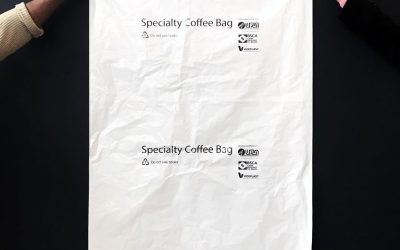
Brazil's Brand-New Bag
When it comes to geeking out over coffee stuff, there’s the totally cool (drone videos over coffee farms), really cool (processing experiments at micromills), and very nerdy but still pretty cool (heat transfer comparisons between a Loring and a Probat).
Every once in a while, though, we find ourselves completely geeked out over something that’s decidedly not cool—or at least not particularly sexy.
You know… like, bags.
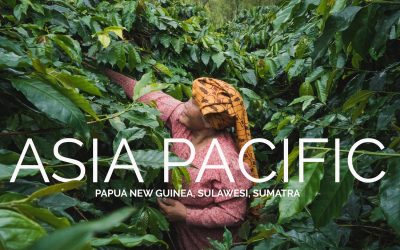
Origin Report: Asia Pacific (PNG, Sulawesi, and Sumatra) 2017
If we were in the BBQ business instead of the coffee business, we would never try to sell Kentucky ribs to someone looking for Texas brisket. Just because both come from Southern states known for an obsession for smoked meat doesn’t mean they’re automatically interchangeable—a fact we generally know to be true in coffee, especially when comparing, say, Colombians and Brazils, or Kenyans with Ethiopians.
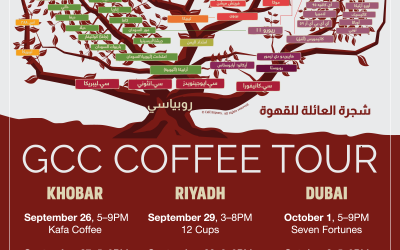
GCC Coffee Tour
Cafe Imports is headed to the Gulf Cooperative Council! We will be teaming up with our partners at Nukhbat Al Marabih and Kafa Coffee to present educational coffee events and cuppings in three cities across the GCC.
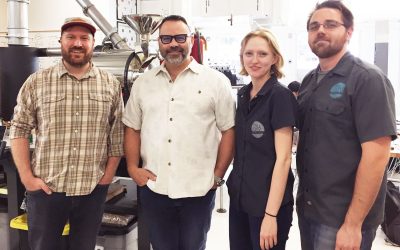
Mill City Roasters Education Partnership
It is inspiring to serve the global coffee community while also surrounded by such thriving local coffee scenes at each of our offices. For example, just one Paul Bunyan–size hop-skip-and-jump down the road from our North American headquarters in Minneapolis, you will find an oasis of roasting experts at Mill City Roasters.

How We Buy Coffee
Buying the best coffees means buying coffees better: At Cafe Imports, we believe in offering both our roaster customers and our producing partners the squarest deal for every quality of coffee, from the workhorse 80–83 point lots all the way up to the 90+ microlots. Our sourcing philosophy is designed to be a holistic way to meet all of these needs, and we have found an approach that helps us develop stronger relationships at origin, discover better coffees all the time, and offer the right prices to our partners all along the supply chain. Read more about what we call our “stratified” approach to sourcing coffees, and learn how you can fit these offerings and this principle into your green-coffee buying with us, too.

Stump the Roaster PDX – October 12 @ 6pm
Stump the Roaster comes back to beautiful Stumptown for another enlightening evening of shop talk, caffeinated confessions, and candid Q&A. Join us at Buckman Coffee Factory for the fine food, drinks from Rogue Ales, and community.

Now Available: The Cafe Imports World Specialty-Coffee Maps
After several years of development, we are pleased to release the first edition of our World Specialty-Coffee Maps. The individual country maps reflect Cafe Imports’ buying history and sourcing efforts, along with the insight of our partners in specialty-coffee-producing regions worldwide.
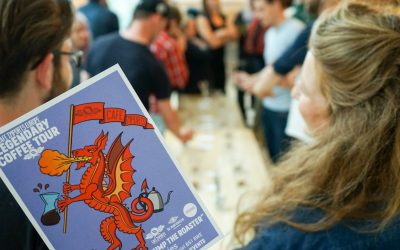
Legendary Coffee Tour Europe 2017 Recap
One of the most exciting and enjoyable parts of working with green coffee is traveling to meet roasters and producers alike. Connecting these two sides of the industry is our main focus, and therefore we are constantly trying to dream up new ways to bring our partners...